

Popular Searches

North Carolina’s Strategic Infrastructure Advantage
Across the United States, businesses are navigating a period of heightening economic uncertainty. Global supply chain realignments, shifting trade dynamics, and a rapidly evolving labor market are reshaping corporate investment strategies. While incentives, workforce, and quality of life remain important to companies making location decisions, speed-to-market and risk reduction have become decisive factors. In this environment, infrastructure – including transportation networks, utilities, logistics connectivity, and shovel-ready industrial sites – has emerged as one of the most powerful tools for mitigating risk and supporting business growth.
North Carolina’s infrastructure ecosystem is helping companies move products faster, reduce operational risk, and scale efficiently. In 2025, CNBC named North Carolina America’s Top State for Business, marking the third time the state has earned the honor in the last four years. Companies like JetZero, Johnson & Johnson, Toyota, and Siemens are choosing North Carolina because it offers what few states can: a connected, resilient, and future-ready foundation for success. From highways and rail networks to ports, airports, utilities, and shovel-ready sites, North Carolina provides the infrastructure companies need to accelerate speed-to-market and support long-term investment.
Key Takeaways
- North Carolina has the second-largest state-maintained highway system in the US
- Four international airports and two deepwater seaports support global trade
- North Carolina offers over 3,000 miles of freight railroad and five intermodal terminals that ship freight statewide and beyond
- Over $115 million has been invested in shovel-ready site programs
-
Industrial electricity rates remain below the national average, and utility providers are building out new capacity to meet future demand
- North Carolina ranks among the top US states for freight movement and logistics efficiency
Quick Links
Ports and Shipping | Rail and Freight | Airports and Global Accessibility | Infrastructure Map | Site Development | Toyota’s Investment in NC Megasite | Utilities and Energy | Water and Wastewater Capacity | FAQs
Transportation Infrastructure in North Carolina
North Carolina is the geographic center of the East Coast and home to the second-largest state-maintained highway system in the country. With more than 80,000 miles (129,000 km) of highway, it’s easy to reach US customers from North Carolina’s main interstates:
- I-95, running the length of the East Coast
- I-40, linking North Carolina to California
- I-85, stretching through the manufacturing heart of the Southeast
- I-77, spanning from Ohio to South Carolina
North Carolina’s intermodal transportation network is unmatched when it comes to quickly connecting companies to domestic and international markets. The state’s well-integrated highway and rail systems provide easy access to domestic suppliers and can reach more than 150+ million customers within a day’s drive. North Carolina also offers four international airports and two deep-water seaports for reaching global markets. According to the Bureau of Transportation Statistics, North Carolina ranks among the top twelve states for total freight value, reflecting the scale of goods moving into, out of, and within the state.

North Carolina's Transportation Advantage
-
01
Percentage of Roads in Good or Fair Condition
Data collected from Bureau of Transportation Statistics (2025)
-
02
Annual Hours Lost in Traffic Congestion
Data collected from INRIX (2025)
Data collected from Bureau of Transportation Statistics (2025)
Data collected from INRIX (2025)
North Carolina Ports and Shipping Infrastructure
North Carolina’s ports – anchored by the Port of Wilmington, the Port of Morehead City, and the Charlotte Inland Port – offer a combination of operational efficiency, geographic positioning, and supply chain resilience that differentiates the state from competing coastal markets. North Carolina’s seaports benefit from the fastest turn times compared to other North American ports. The Charlotte Inland Port sits at the heart of the Southeast’s manufacturing and distribution sites.
North Carolina’s two deepwater seaports with on-dock rail offer fast turn times with capacity to support 600,000+ TEUs and 4 million+ tons of general cargo annually. The ports are well–integrated with the state’s highway and rail networks, accelerating speed-to-market. North Carolina companies also enjoy easy access to the Ports of Charleston, Norfolk, and Savannah.
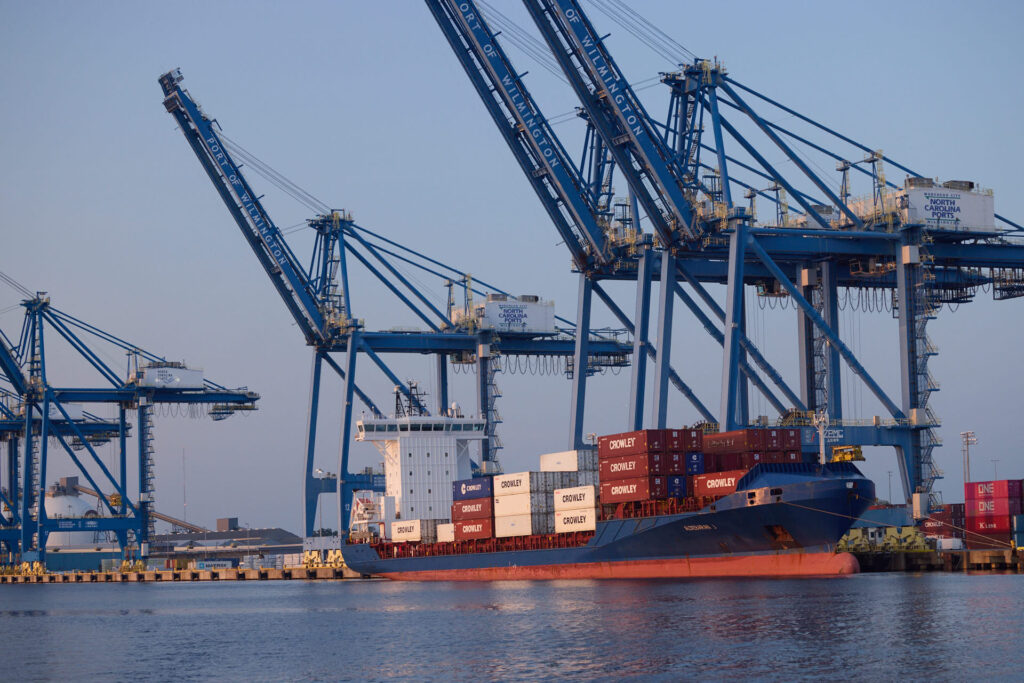
Port of Wilmington
The Port of Wilmington has expansion plans that will include a new on-dock intermodal facility that will introduce 5,000 more feet of working track, harbor deepening to better accommodate deep-draft container vessels, and a container yard expansion that will double annual throughput capacity to more than one million TEUs. Other features of the port include:
- Serves container, bulk, breakbulk, and ro/ro operations
- Channel depth of 42 feet, with plans to increase depth to 47 feet
- On-terminal cold storage warehouse facility and 1M sf of covered storage
- Seven container cranes
- Next-day rail service to Charlotte Inland Port
- On-dock cold storage and cross-docking station
- Designated as Foreign Trade Zone 214
- Near-port cold storage supporting produce, protein, and life sciences
- Near-port USDA APHIS certified cold treatment facility
Port of Morehead City
- General cargo and bulk handling facility
- Channel depth of 45 feet
- 1M+ sf of covered and sprinklered storage
- Designated as Foreign Trade Zone 214
Revolutionizing Temperature-Controlled Logistics
North Carolina provides best-in-class cold storage facilities and is actively preparing for future cold storage logistics. Frontier Scientific Solutions, an innovative supply chain provider, is building a new temperature-controlled logistics hub in Wilmington, North Carolina (and a companion facility in Shannon, Ireland) to facilitate the safe, timely, and cost-effective delivery of pharmaceutical and biopharmaceutical products between the United States and Europe. The facility will offer strategic value for life sciences supply chains with direct runway access at Wilmington International Airport (ILM), flights exclusively dedicated to life sciences products, a designation within a Foreign-Trade Zone (FTZ), proximity to major interstate highways and the Port of Wilmington, and will be located only two hours from Research Triangle Park, one of North America’s leading life sciences hubs.
Rail and Port Connectivity
Few states combine their maritime gateways with an inland logistics network as effectively as North Carolina. The Port of Wilmington offers express rail service to major distribution corridors in the Southeastern and Midwest US, reducing transit costs and reliance on long-haul trucking. Companies also enjoy access to discretionary grant programs for site development needs along active rail lines.
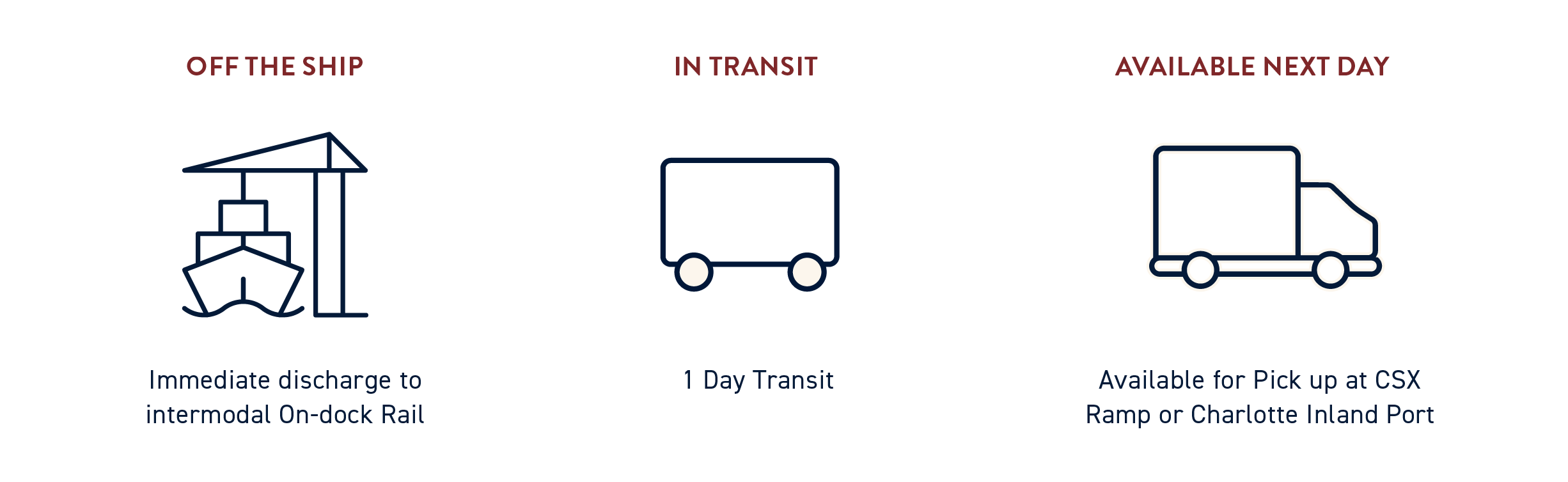
Queen City Express
The Queen City Express offers 1-day rail transit from the Port of Wilmington to Charlotte Inland Port. It reduces transit costs and has no dwell times at either port, ensuring smooth and efficient cargo movement.
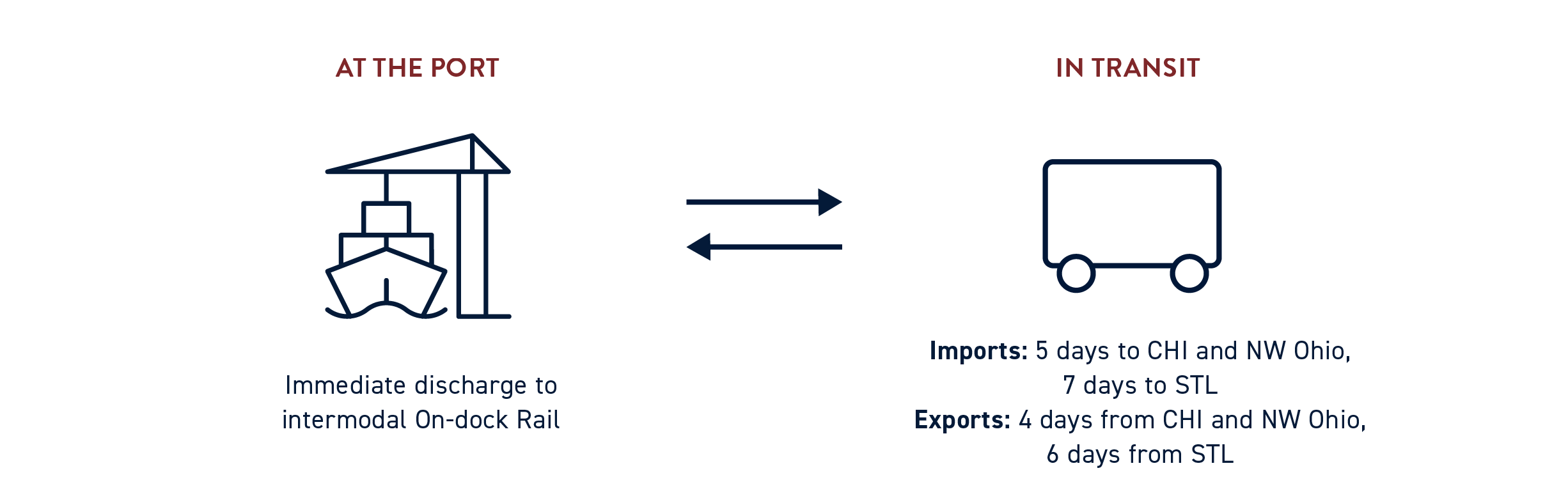
Wilmington Midwest Express
The Wilmington Midwest Express is your gateway to the heartland, offering 5-day transit to Chicago and northwest Ohio, and 7-day transit to St. Louis with no rail dwell times.
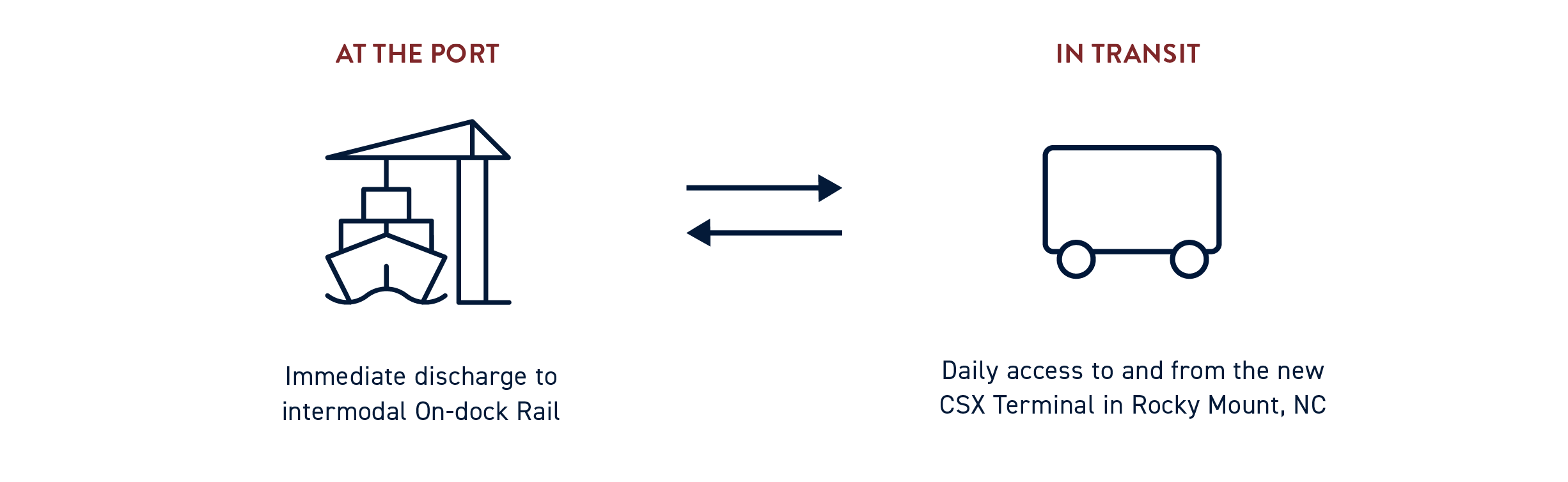
Wilmington-Rocky Mount Express
The Wilmington-Rocky Mount Express offers access to the Carolinas and Southeastern markets with a competitive rate and no dwell times.
International Connectivity
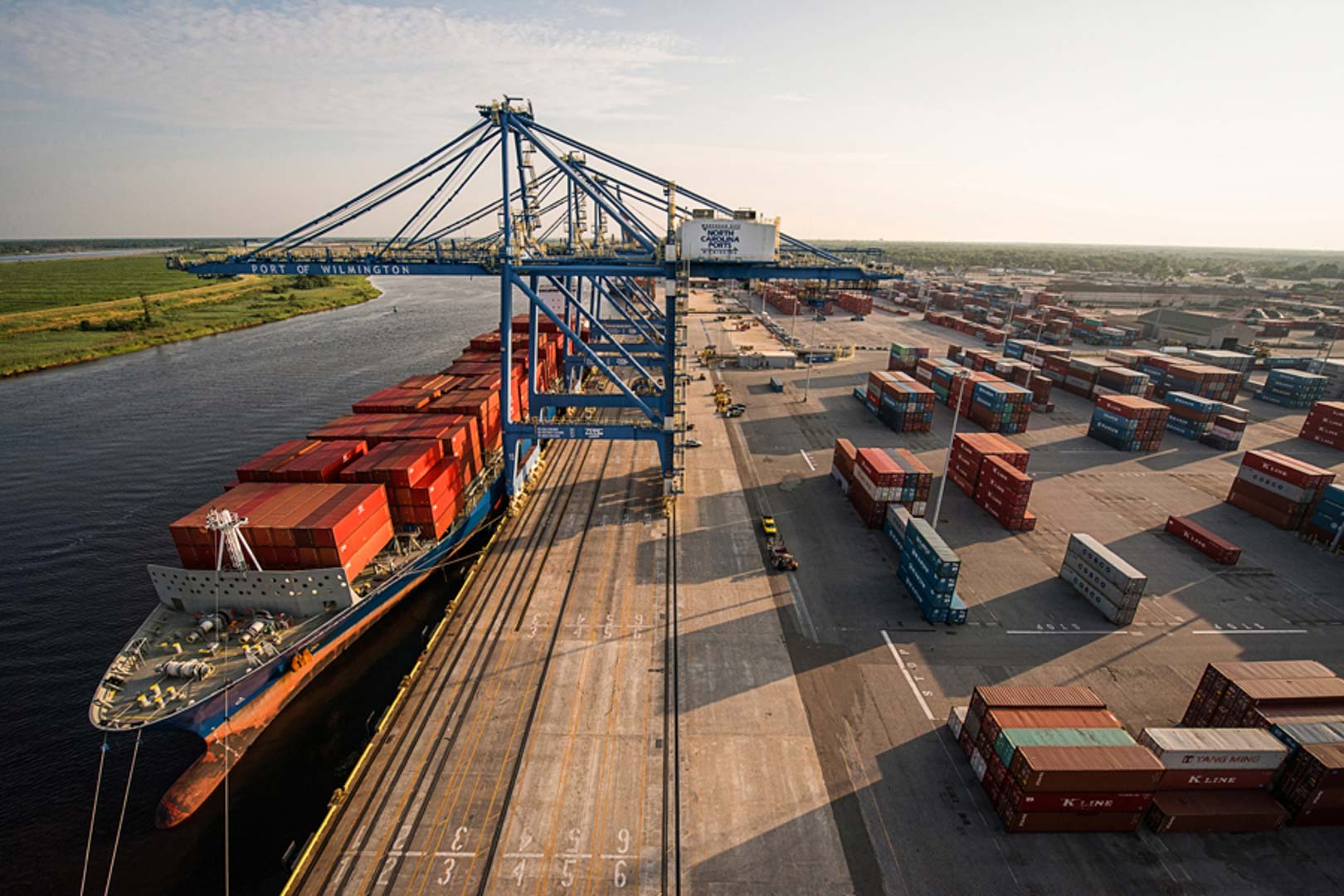
#1 Most Efficient Port in North America (Port of Wilmington)
Reefer Plugs for Refrigerated Containers
Located in a Designated Foreign Trade Zone
Rail Infrastructure and Freight Network
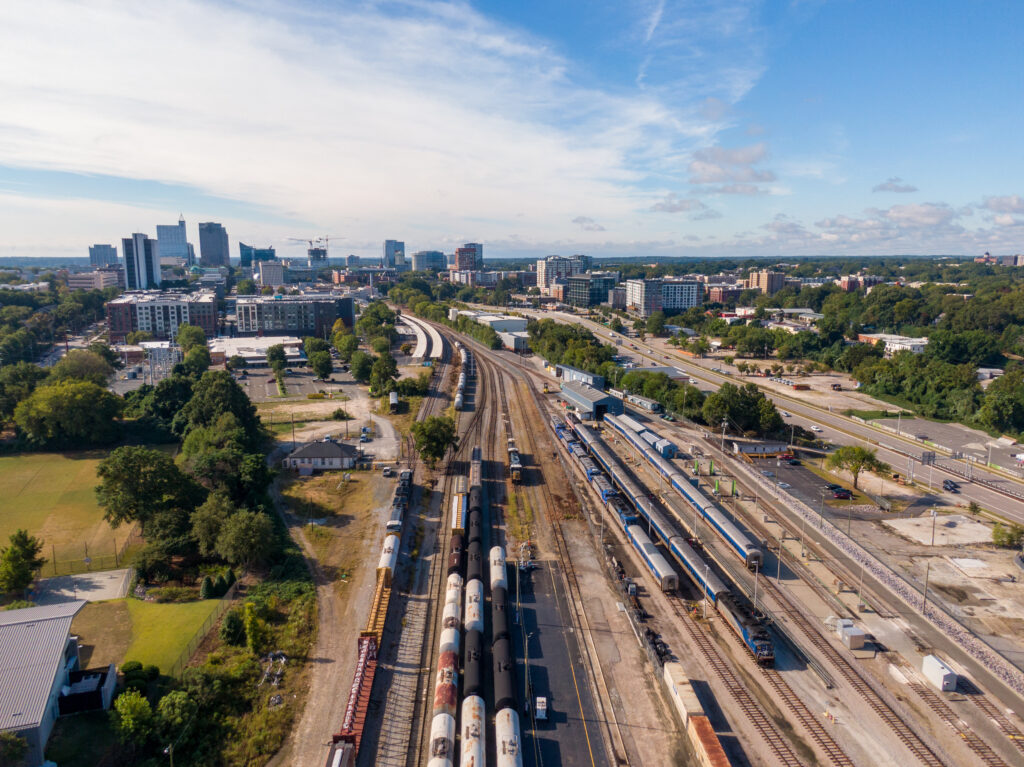
North Carolina has more than 3,200 miles (5,100km) of track. Two Class 1 rail carriers, CSX Transportation (CSX) and Norfolk Southern (NS), offer direct service to North American markets and to all major ports along the US East Coast.
- Intermodal service hubs in Charlotte (NS, CSX), Greensboro (NS)and Rocky Mount (CSX)
- Daily, direct intermodal service between Port of Wilmington and Charlotte Inland Port (CSX)
- 19 regional railroads, including six that connect to both NS and CSX railroads
Investment in North Carolina’s Rail Infrastructure Since 1849
The North Carolina Railroad Company (NCRR) has been driving economic growth for the state for over 175 years and is still finding ways to prepare the economy of today for the future. In November 2025, NCRR announced it would invest $500,000 to facilitate FIT Precast’s new headquarters in Gaston County. FIT Precast, which manufactures precast concrete and piping products, is investing $102 million and creating 125 jobs at the site. NCRR’s investment will cover the design and construction of a rail spur to allow FIT Precast to receive and distribute a minimum of 500 rail cars annually.
Airport Infrastructure and Global Accessibility
In North Carolina, people and cargo can travel effortlessly from ten airports that service over 250 destinations, over 50 of which are international. Ten airports offer commercial services, including four international airports that provide easy access to global markets. According to the North Carolina Department of Transportation, ninety-six percent of the state’s population lives within a 30-minute drive of a public airport. North Carolina’s international airports include:
- Charlotte Douglas International Airport (CLT), the world’s seventh-busiest airport
- Raleigh-Durham International Airport (RDU), one of the country’s Top 50 fastest-growing airports
- Wilmington International Airport (ILM), home to the ILM Business Park with easy access to highways, rail, and the Port of Wilmington
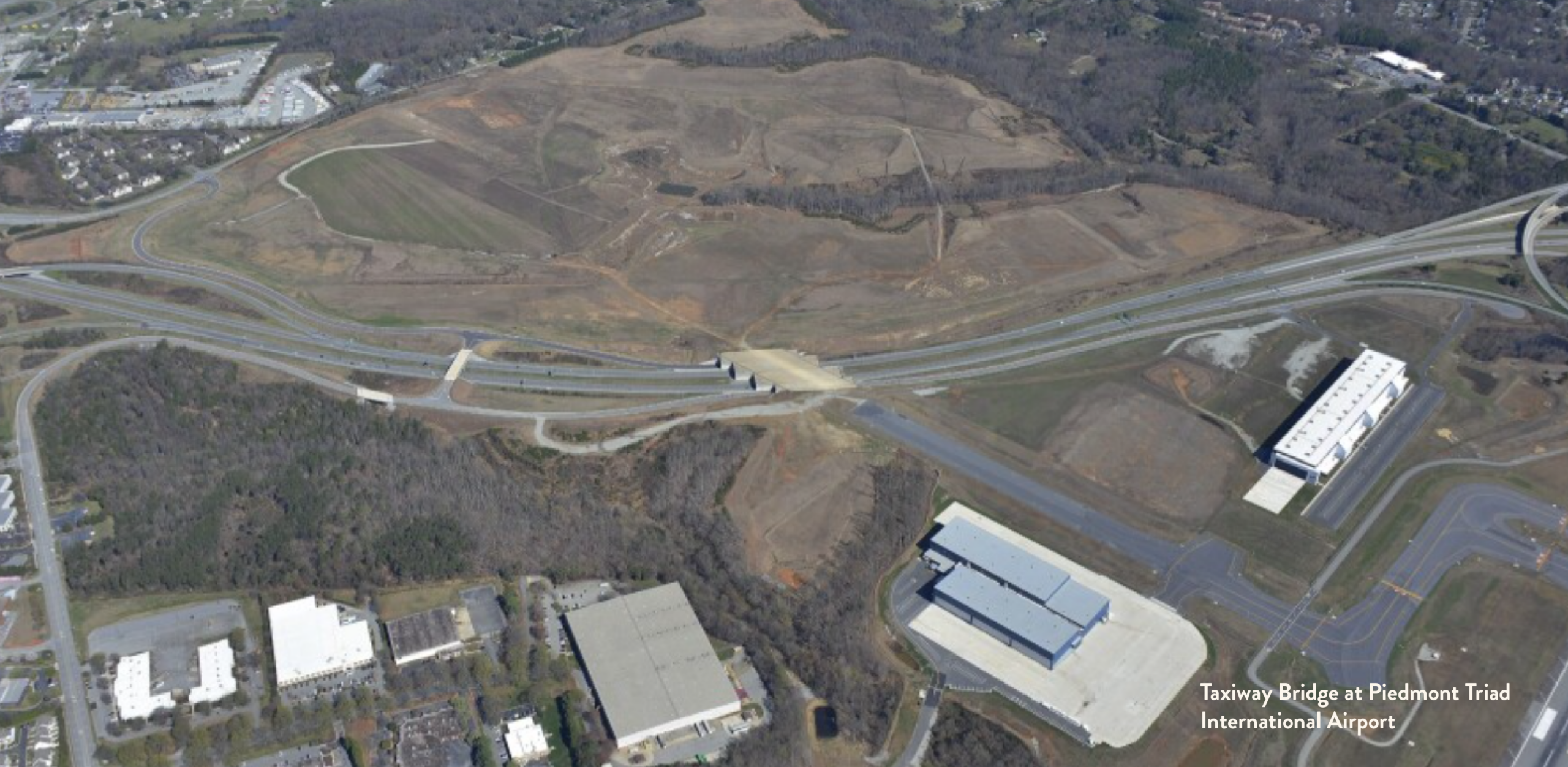
- Piedmont Triad International Airport (GSO), a premier air cargo center and home to the FedEx Mid-Atlantic Air Hub

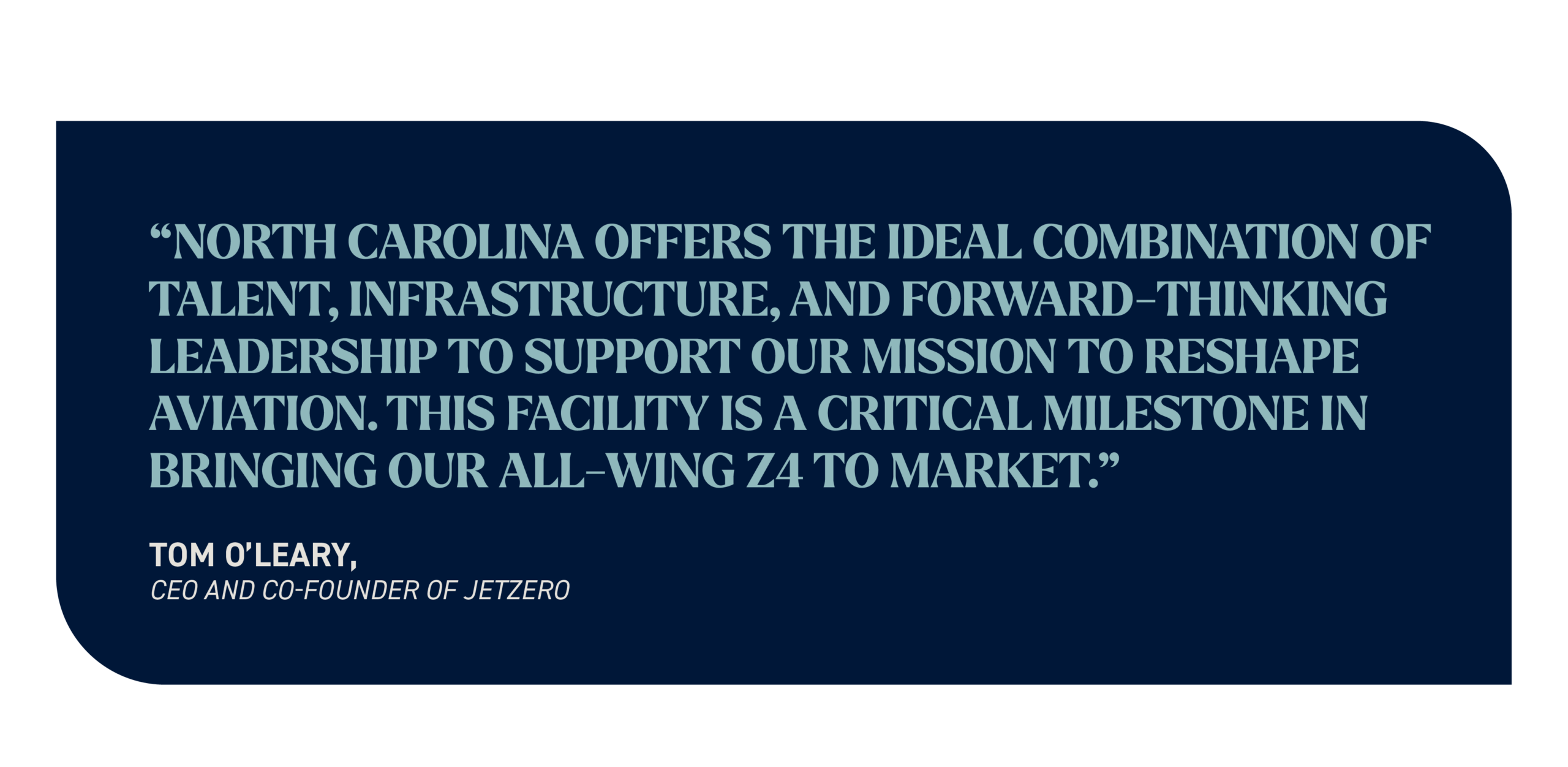
Success Story: Aviation Infrastructure and Shovel-Ready Sites Drive Growth in North Carolina

Explore North Carolina’s Robust Infrastructure Network
Shovel-Ready Sites and Megasite Development
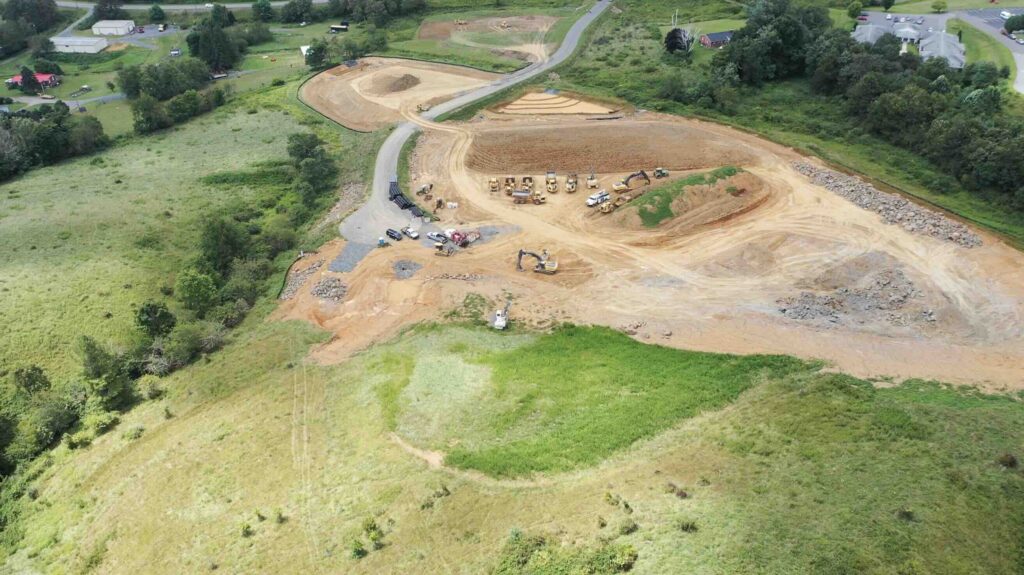
Beyond an integrated transportation network, the availability of shovel-ready sites often determines where corporate investment occurs. Even the most connected location can lose a project if site development timelines produce uncertainty. North Carolina has enjoyed considerable success recruiting large economic development projects and is heavily invested in preparing more competitive site options for advanced manufacturing projects. In North Carolina’s 2022-23 budget legislation, the General Assembly established the Megasite Readiness Program, a competitive grant program to help local governments identify, acquire, construct and market megasites.
In the 2023-24 budget legislation, the General Assembly enacted the Selectsite Readiness Program to prepare sites less than 1,000 acres that are capable of handling major advanced manufacturing projects. As of 2025, over $115 million has been allocated to the Megasite and Selectsite readiness programs in order to identify and prepare sites to give businesses a faster, lower-risk path from an investment decision to a scaled operation.
Shovel-Ready Sites
North Carolina has prioritized the development of shovel-ready sites across the state and offers a multitude of certification programs to ensure sites are ready for immediate investment, reducing delays for companies. A shovel-ready site is one where:
- Environmental, engineering and title risks are known or resolved,
- Infrastructure capacity has been verified or designed,
- Development timelines are predictable,
- Costs can be reasonably estimated, and
- Legal and regulatory barriers are minimized.
North Carolina is currently home to five strategically located megasites, each of which are situated on at least 1,000 acres of land. For smaller sites, the state’s Certified Sites program helps companies reduce the risks associated with development by providing detailed information about a site’s price and availability, utilities, access, environmental concerns, and potential development costs. Sites are periodically re-certified to ensure accurate and reliable data.
Site Development Programs in North Carolina


Success Story: Toyota Invests $13.9B at North Carolina Megasite

Reliable Utilities and Energy Infrastructure
Reliable utility systems are essential to economic growth. According to economic development leaders in North Carolina, power availability, water and wastewater capacity, and upgrade timelines are critical factors. North Carolina’s utility ecosystem – spanning electricity, water, and wastewater – stands out as a strategic advantage for companies across sectors, from advanced manufacturing to data centers and life sciences.

Dependable Energy
A company’s long-term success often depends on predictable, affordable, and reliable energy that will not just be available on day one, but throughout the life of the investment. North Carolina boasts a robust electric generation and delivery network capable of supporting heavy industrial loads and future growth.
North Carolina’s regulated utility model has historically given the state reliable, competitively priced power. This model also provides the state with the ability to conduct long-term integrated resource planning to keep costs as low as possible while supporting economic growth. Duke Energy delivers approximately 96% of utility-supplied electricity in the state. Dominion Energy North Carolina provides another 4%, primarily in the northeastern part of the state. These Investor-Owned Utilities (IOUs) are regulated by the North Carolina Utilities Commission (NCUC), keeping the utility accountable to state regulators and customers, unlike the state’s 31 electric cooperatives and over 70 municipal power systems, whose retail rates fall outside NCUC jurisdiction.
North Carolina’s competitive and predictable utility costs allow companies to keep operating costs down and forecast expenses with confidence. Data from the Energy Information Administration (EIA) shows that as of December 2025, North Carolina’s industrial electricity rates were 7% below the national average. These below-average and predictable rates help manufacturers keep operating costs down and strengthen the state’s competitiveness.
Duke Energy’s long-term energy forecasting also ensures that manufacturers can be accommodated now and into the future with minimal service constraints. Over the past 15 years, customer energy needs in the Carolinas grew by approximately 10 terawatt-hours (TWh) – looking ahead, growth over the next 15 years is forecasted to surge eightfold, with energy needs increasing by nearly 80 TWh. To meet this demand, Duke Energy’s 2025 Carolinas Resource Plan includes maximizing the value of existing resources, adding new supply-side resources, and developing a diverse, increasingly clean generation portfolio.
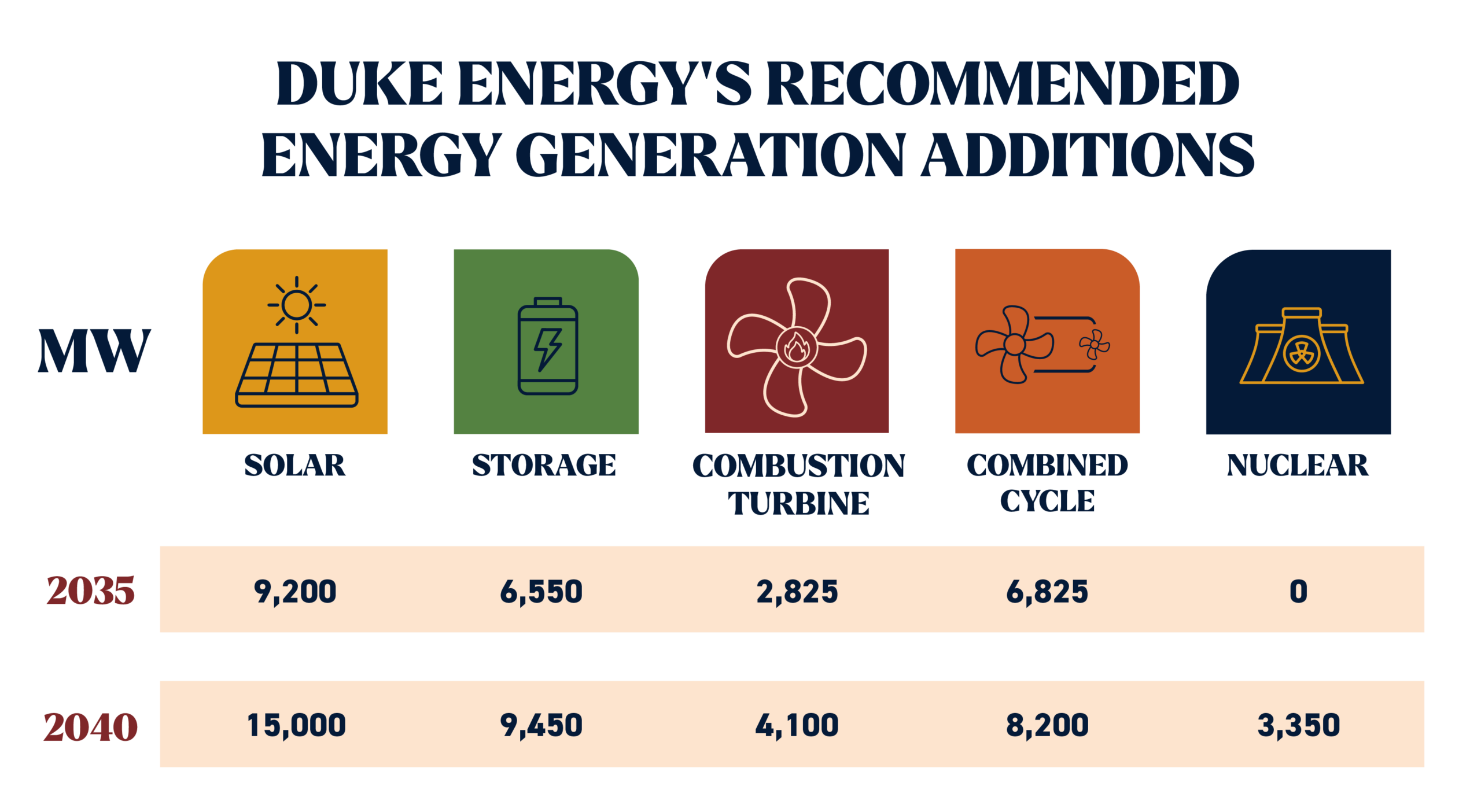
Note: Nameplate capacity additions beginning 2026, including 4,686MW of solar and 1,040 MW of battery that are under development and included in all portfolios as forecasted resources; does not include uprates to existing resources.
Duke Energy Nuclear Fleet Sets Reliability Record
In 2025, Duke Energy’s nuclear fleet set a new reliability record, providing communities across the Carolinas with around-the-clock power customers can count on. Steady, predictable output from nuclear units strengthens grid reliability and helps manage system costs, directly supporting growing energy needs.
Duke Energy’s nuclear plants were generating power a combined 96.9% of the time in 2025, a new record for system-wide capacity factor. The fleet’s strong performance resulted in $600 million in federal nuclear production tax credits, which are directly passed on to customers to help reduce costs.
Water and Wastewater Infrastructure Capacity
Nationwide, communities are facing mounting water and wastewater infrastructure challenges under the combined pressures of residential, commercial, and industrial growth. North Carolina is no stranger to these growing pains and is taking steps to leverage state and local partnerships to modernize water infrastructure for future growth.
One town working proactively to align water infrastructure with economic growth is Holly Springs, North Carolina in Wake County. Over the past few years, Holly Springs has become a biotech powerhouse as companies like Genentech, FUJIFILM Biotechnologies, CSL Seqirus, and Amgen have established and expanded large manufacturing sites there. Most of these companies are biologics manufacturers, producing injectable therapies where water is a primary ingredient, requiring large volumes of high-quality supply. As a result, their operations also generate significant amounts of wastewater, which is typically pre-treated on site to meet discharge standards before being sent to municipal facilities for further treatment.
To keep pace with its residential and commercial growth, the Town of Holly Springs has committed over $200 million to increasing the current treatment capacity at the Utley Creek Wastewater Facility from six million gallons per day to eight million gallons by 2030. The project represents one of the largest infrastructure investments in Holly Springs’ history and demonstrates the town’s long-term commitment to economic growth.
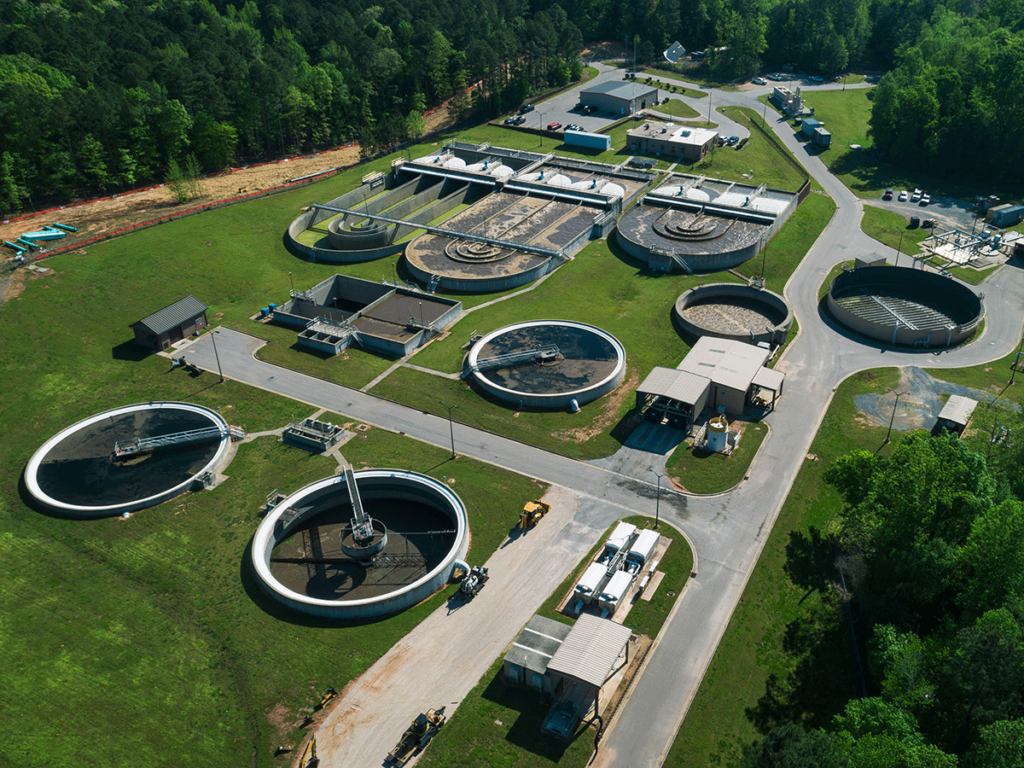
Utley Creek Water Reclamation Facility (Photo Credit: Courtesy of the Town of Holly Springs)
Statewide, North Carolina is also taking steps to keep water infrastructure a strategic advantage for its long-term economic growth. In 2025, the North Carolina Chamber, the state’s largest bi-partisan business advocacy group, released a Water Infrastructure Competitiveness Analysis, outlining a coordinated approach to secure North Carolina’s water infrastructure. Key recommendations of the report include conducting water availability assessments, establishing funding mechanisms for water availability studies and infrastructure, and proactively aligning water systems with economic development to reduce delays and uncertainty.
“We are excited to further expand our investment in our state-of-the-art manufacturing facility in Holly Springs, North Carolina. This expansion reflects our long-term commitment to the United States and communities like Holly Springs that offer the kind of world-class biotech talent, top research institutions, and strong infrastructure that make innovation possible.”
-Ashley Magargee, Genentech CEO
Why Companies Choose North Carolina
North Carolina’s infrastructure helps companies move faster and reduce risk in an uncertain economy. The state is winning investment because it offers the physical foundation to build, ship, power, and scale with confidence. North Carolina, however, does not just rest on its laurels; it is actively preparing for future growth through forecasting and targeted investments in transportation infrastructure, energy and water capacity, and site readiness as core economic development differentiators. Companies can invest in North Carolina with confidence that it has the infrastructure to power business growth now and into the future.
Thank You to Our Sponsor

Businesses and local governments turn to Parker Poe to structure transactions, navigate regulations, and resolve disputes. Founded in 1884, the Southeast business law firm today has over 300 attorneys across offices in Charlotte and Raleigh, North Carolina; Charleston, Columbia, Greenville, and Spartanburg, South Carolina; Atlanta, Georgia; and Washington, DC.
Frequently Asked Questions
-
Why is North Carolina's infrastructure attractive to businesses?
North Carolina offers an integrated infrastructure network that includes highways, rail service, international airports, deepwater seaports, reliable utilities, and shovel-ready industrial sites. These assets help companies reduce risk, improve speed-to-market, and support long-term growth.
-
What transportation advantages does North Carolina offer companies?
North Carolina provides access to major interstate highways, more than 3,000 miles of freight rail, four international airports, and two deepwater seaports. More than 150 million consumers are within a day’s drive, making the state a strategic location for domestic and international distribution.
-
Does North Carolina offer shovel-ready industrial sites?
Yes. North Carolina has invested more than $115 million in site readiness programs and offers certified industrial sites and megasites across the state. These programs help reduce development timelines and provide companies with greater certainty during the site selection process.
-
Are North Carolina's utilities capable of supporting future business growth?
North Carolina’s utility providers continue to invest in electric generation, transmission infrastructure, water capacity, and wastewater systems to support population growth and business expansion. The state’s regulated utility model, competitive industrial power rates, and long-term infrastructure planning help provide companies with reliable service and predictable operating costs.
Need more help?