

Popular Searches
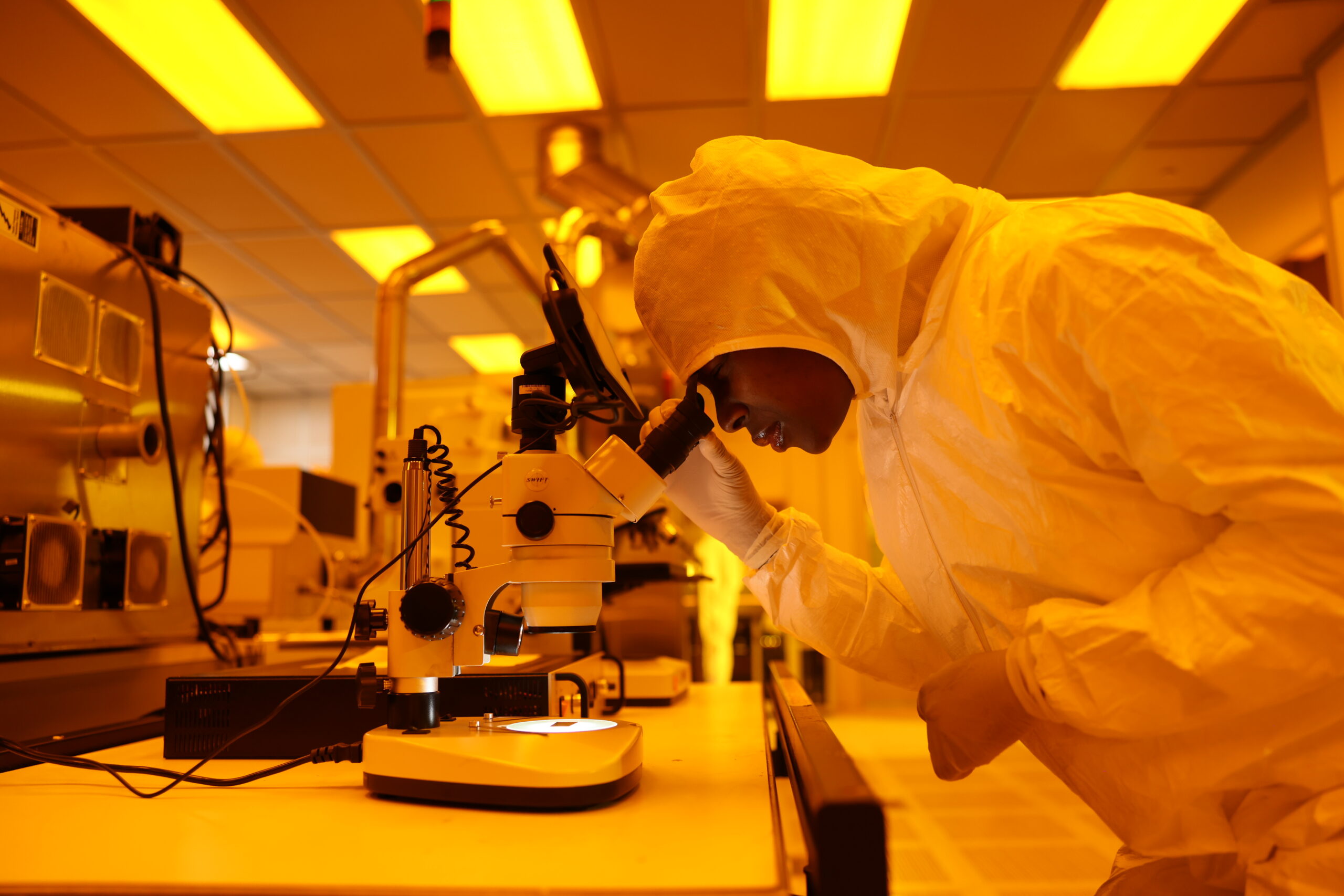
North Carolina is a Growing US Semiconductor Hub
North Carolina’s semiconductor industry is rapidly emerging as a critical part of the United States’ effort to strengthen domestic chip production and secure global supply chains. As demand for semiconductors continues to grow across artificial intelligence, clean energy, telecommunications, and defense applications, North Carolina is gaining recognition as a strategic location for both established firms and new entrants.
Over the past decade, the state has attracted more than $7.9 billion in semiconductor-related investment across power electronics, radio frequency technologies, photonics, and advanced materials, according to a report from WiserTrade. Today, approximately 73,000 workers are employed in core semiconductor-related occupations in North Carolina, and more than 337,000 workers support the broader ecosystem, based on Lightcast labor market data.
North Carolina’s workforce growth further sets it apart. The state has the fastest-growing semiconductor-related workforce in the country, with employment increasing by approximately 23 percent since 2021, according to workforce data from Lightcast. This combination of investment, workforce expansion, and policy alignment is driving sustained momentum.
What Makes North Carolina Competitive for Semiconductor Companies
North Carolina’s competitive advantage lies in its ability to support multiple parts of the value chain. A strong base of semiconductor companies, a deep talent pipeline, and access to critical materials that support the semiconductor manufacturing process all contribute to the state’s growth.
Rather than focusing solely on chip fabrication, North Carolina provides a balanced ecosystem spanning research, materials, and advanced manufacturing.
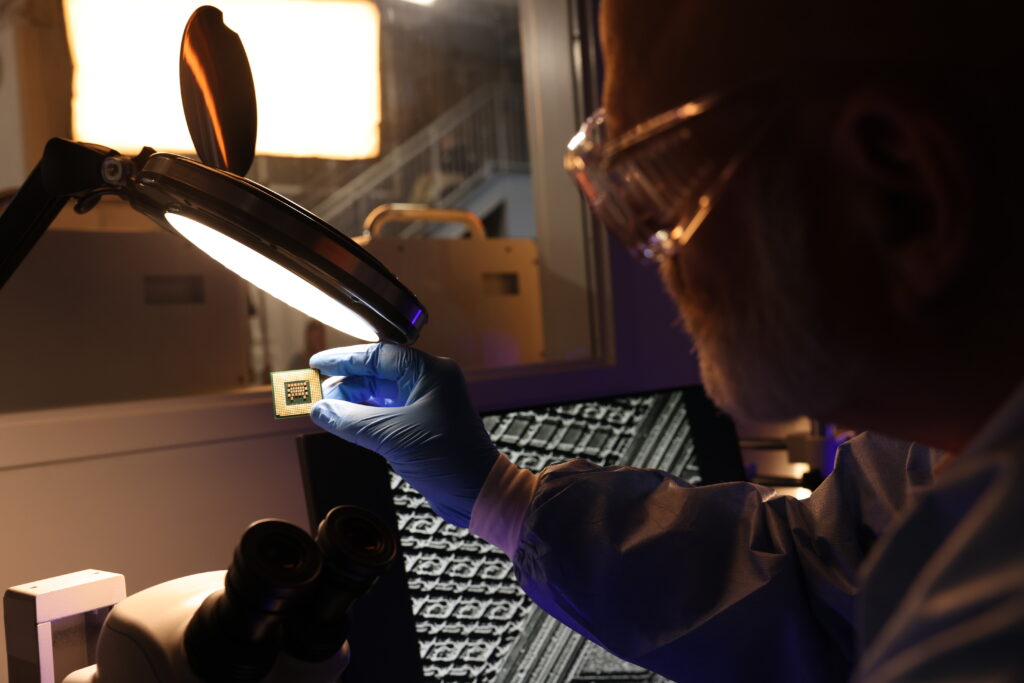
Leading Semiconductor Companies in North Carolina
The growth of semiconductor firms in the state reflects North Carolina’s expanding role in the industry. Companies in the region operate across materials, design, photonics, and manufacturing technologies.
Key Semiconductor Companies in North Carolina
| Company | Location | Focus | Role |
|---|---|---|---|
| NVIDIA | Durham, NC | AI and accelerated computing | Drives demand for advanced semiconductor infrastructure |
| Wolfspeed | Durham, NC | Silicon carbide materials and devices | Leader in wide bandgap semiconductors |
| MACOM | Durham, NC and Morrisville, NC | RF and photonic semiconductors | Supports aerospace, defense, and communications |
| Infineon Tehcnologies | Morrisville, NC | Power semiconductors | Enables energy efficiency and electrification |
| Analog Devices | Raleigh, NC | Analog and mixed-signal chips | Critical for sensing and signal processing |
| Lumentum | Greensboro, NC | Optical and photosonic production | Expanding indium phosphide production in North Carolina |
| IQE | Greensboro, NC | Advanced semiconductor materials | Supplies epitaxial wafers for RF and photonics |
| Cadence Design Systems | Cary, NC | Electronic design automation | Supports chip design and verification |
A recent example of growth includes Lumentum’s acquisition of a semiconductor fabrication facility in Greensboro. The company plans to begin indium phosphide production, a key material used in photonics and high-speed data applications. This type of investment reinforces North Carolina’s strength in specialized manufacturing and advanced materials.
Semiconductor Research and Development in North Carolina
A defining characteristic of the North Carolina semiconductor industry is its strength in research and development. While some regions focus primarily on fabrication, North Carolina has built a nationally recognized ecosystem that supports innovation, prototyping, and commercialization.
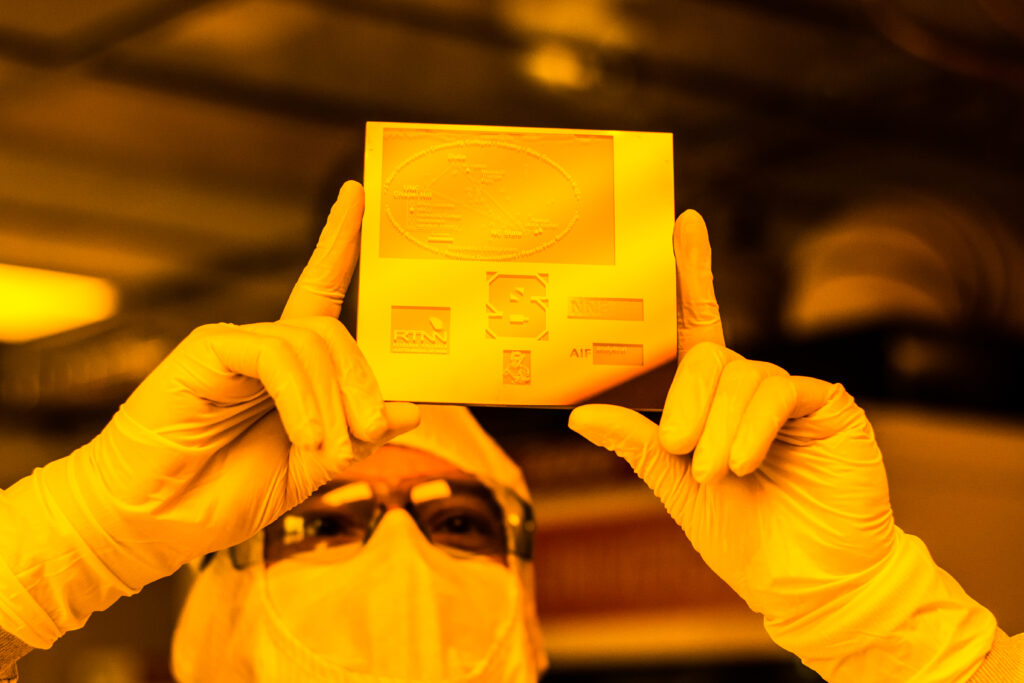
Photo Courtesy of NC State CLAWS
Key R&D Organizations Supporting the NC Semiconductor Industry
- CLAWS Hub (Commercial Leap Ahead for Wide Bandgap Semiconductors): Based at North Carolina State University (NC State), this hub is part of the national Microelectronics Commons network and supports prototyping and testing of next-generation semiconductor technologies.
- PowerAmerica Institute: PowerAmerica is a Manufacturing USA institute focused on advancing wide bandgap semiconductors such as silicon carbide and gallium nitride.
- Semiconductor Research Corporation (SRC): Headquartered in Durham, SRC connects industry, academia, and government to advance semiconductor research and fund innovation.
These organizations provide companies with access to cutting-edge facilities, collaborative research opportunities, and emerging technologies—critical for companies involved in advanced materials and semiconductor manufacturing processes.
Semiconductor Workforce and Training Programs in North Carolina
North Carolina’s semiconductor workforce is one of the most comprehensive and industry-aligned talent pipelines in the country. The state’s approach is not just about producing graduates, but about aligning education, training, and hands-on experience directly with employer needs across the semiconductor value chain.
Universities Supporting Semiconductor Talent
North Carolina’s research universities play a central role in developing highly skilled talent in engineering, materials science, and applied physics.
- North Carolina State University: A national leader in semiconductor education and research, particularly through its work in wide bandgap semiconductors such as silicon carbide and gallium nitride. Through its integration with the CLAWS Hub and PowerAmerica, NC State provides students with direct exposure to cleanroom environments, fabrication processes, and industry-sponsored research.
- Duke University: Offers advanced programs in electrical and computer engineering, as well as specialized semiconductor-focused coursework. Its graduate-level Semiconductor Technology track provides training in semiconductor physics, lithography, materials, and integrated systems. Duke has also made significant investments in semiconductor research and education, including funding for faculty, fellowships, and research initiatives focused on next-generation computing and nanoelectronics.
- North Carolina Agricultural and Technical State University: Provides interdisciplinary training in nanomaterials and semiconductor-related technologies through the Joint School of Nanoscience and Nanoengineering. The university partners with leading semiconductor companies, like Intel and Micron, to provide students with hands-on experience through internships and applied research, strengthening the pipeline of diverse and industry-ready talent.
- University of North Carolina at Charlotte: Contributes through applied research in photonics, sensors, and communications technologies at the Center for Optoelectronics and Optical Communications. These capabilities are directly relevant to semiconductor applications in networking, data centers, and advanced electronics.
Community College Semiconductor Training Programs
North Carolina’s community college system supports technician-level roles critical to semiconductor manufacturing.
- Central Carolina Community College: Offers a Microelectronics Manufacturing certificate and an associate degree in Laser and Photonics Technology, preparing students for roles in optics, semiconductor manufacturing, and advanced production environments.
- Wake Technical Community College: Provides coursework in semiconductor physics as part of its Electronics Engineering Technology program, covering solid-state physics, semiconductor devices, and fabrication techniques that are directly relevant to the semiconductor manufacturing process.
In addition to formal programs, community colleges provide customized training solutions tailored to company-specific needs. This flexibility allows employers to rapidly upskill workers and adapt training programs to evolving technologies and production requirements for North Carolina semiconductor manufacturing companies.
Workforce Scale and Output
The scale of North Carolina’s talent pipeline is a key differentiator. Each year, the state produces thousands of credentials across certificate, associate, bachelor’s, and graduate programs in semiconductor-relevant fields. This includes strong output in engineering, materials science, and advanced manufacturing disciplines.
This multi-level pipeline ensures that companies have access to talent across all roles, from technicians and operators to engineers and researchers, supporting long-term growth across the North Carolina semiconductor industry.
The Role of the EDPNC in Workforce Development
The EDPNC serves as the connector across this ecosystem, helping companies navigate and access the state’s workforce resources. By coordinating with universities, community colleges, and training providers, the EDPNC ensures that companies can align hiring needs with available talent and training programs.
In addition, the EDPNC supports companies by facilitating partnerships, identifying workforce funding opportunities, and connecting employers with customized training solutions. This coordinated approach enables companies to scale efficiently and integrate into the broader North Carolina semiconductor manufacturing ecosystem.
A Highly Educated Semiconductor Workforce
-
01
Core Semiconductor Workforce Growth (2021 to 2026)
North Carolina stays ahead of the competition in semiconductor workforce growth over the last five years. The state's natural resources combined with recent investments by semiconductor companies across the globe has only increased the training and education for this industry's workforce.
Source: Lightcast, 2026
North Carolina stays ahead of the competition in semiconductor workforce growth over the last five years. The state's natural resources combined with recent investments by semiconductor companies across the globe has only increased the training and education for this industry's workforce.
Source: Lightcast, 2026
Semiconductor Supply Chain in North Carolina: Rare Earths and Critical Materials
Rare Earth Minerals in North Carolina
Rare earth materials are critical inputs for semiconductor manufacturing, as well as electric vehicles, renewable energy systems, and defense technologies. North Carolina is emerging as a strategic hub for this segment of the supply chain.
Vulcan Elements is one of the companies leading this effort. The company has established operations in Durham and is developing a commercial-scale facility in Benson that will be the largest rare earth magnet plant outside of China, with the capacity to produce approximately 10,000 metric tonnes annually. The growth of Vulcan Elements’ rare earth magnets production represents a significant step toward reshoring critical materials.
This expansion strengthens the role of North Carolina rare earth minerals in supporting the domestic semiconductor ecosystem and reducing reliance on foreign supply chains.
North Carolina’s Unique Ultra High Purity Quartz Resource
Spruce Pine, North Carolina is home to the world’s only economically viable source of ultra-high purity quartz used in semiconductor manufacturing.

Town of Spruce Pine, North Carolina
This material is essential for producing silicon wafers, which are foundational to nearly all semiconductor devices. Two mines in the region, operated by Sibelco and The Quartz Corp., supply this material to global markets. This makes North Carolina a critical link in the global supply chain and a natural home for semiconductor companies.
While other countries have explored deposits, experts note that replicating the purity and production capabilities found in Spruce Pine would take years and may not achieve the same level of quality. John Schlanz, chief minerals processing engineer at the Minerals Research Laboratory in Asheville, has noted that many quartz deposits worldwide contain impurities that limit their use in the most demanding semiconductor applications, underscoring the rarity of Spruce Pine’s exceptionally pure quartz.
The Role of the EDPNC in Supply Chain Development
The EDPNC helps coordinate incentives and connects manufacturers to supply chain partners, ensuring that investments in rare earth minerals in North Carolina, combined with unique resources such as the ultra-high purity quartz found in Spruce Pine, translate into long-term industrial growth and integration with semiconductor operations.
How North Carolina Fits into the Future of the US Semiconductor Industry
North Carolina’s role in the future of the US semiconductor industry is defined by its ability to support multiple segments of the value chain.
Key Advantages:
- Strength in advanced materials such as silicon carbide and photonics
- Strong research and development infrastructure
- Workforce development and training programs
- Supply chain inputs including rare earth materials and quartz
Rather than competing solely on large-scale fabrication, North Carolina offers a diversified ecosystem that supports innovation, scalability, and long-term growth.
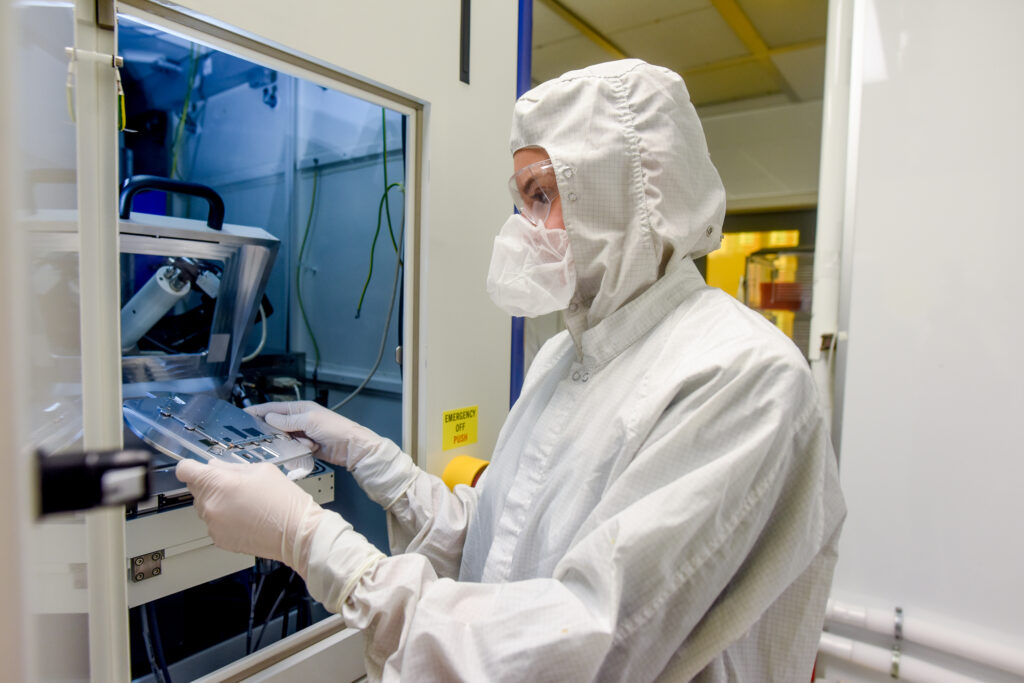
Photo Courtesy of NC State CLAWS
Conclusion: Why Semiconductor Companies are Choosing North Carolina
The continued expansion of semiconductor companies in North Carolina reflects the state’s growing importance in the US semiconductor landscape.
With billions in investment, a rapidly growing workforce, and unique access to critical materials, the state provides a compelling environment for semiconductor companies seeking to locate, expand, or partner within the United States.
For companies evaluating their next move, North Carolina offers more than a strong business case—it offers a coordinated path to execution. EDPNC works directly with semiconductor manufacturers, suppliers, and technology firms to support site selection, workforce strategy, and connections across the state’s ecosystem.
If your company is exploring expansion or investment opportunities, connect with the EDPNC team to access tailored insights, available sites, and workforce solutions aligned to your needs.
Frequently Asked Questions
-
Is North Carolina a strong location for semiconductor workforce talent?
Yes. North Carolina has one of the fastest-growing semiconductor workforces in the United States, with employment in semiconductor-related roles growing by approximately 23% since 2021. This growth is supported by universities, community colleges, and targeted semiconductor workforce training programs, ensuring a strong and scalable talent pipeline.
-
How does EDPNC support semiconductor companies expanding into North Carolina?
The EDPNC helps companies navigate site selection, workforce development, and partnerships across the North Carolina semiconductor industry, connecting them to training programs, infrastructure, and supply chain partners.
-
What types of semiconductors are produced in North Carolina?
North Carolina specializes in advanced materials such as silicon carbide, RF technologies, and photonics, all of which play a key role in the semiconductor manufacturing process.
-
Are there incentives available for semiconductor companies locating in North Carolina?
Yes. Companies can benefit from state and local incentives that support North Carolina semiconductor manufacturing.
Need more help?