

Popular Searches
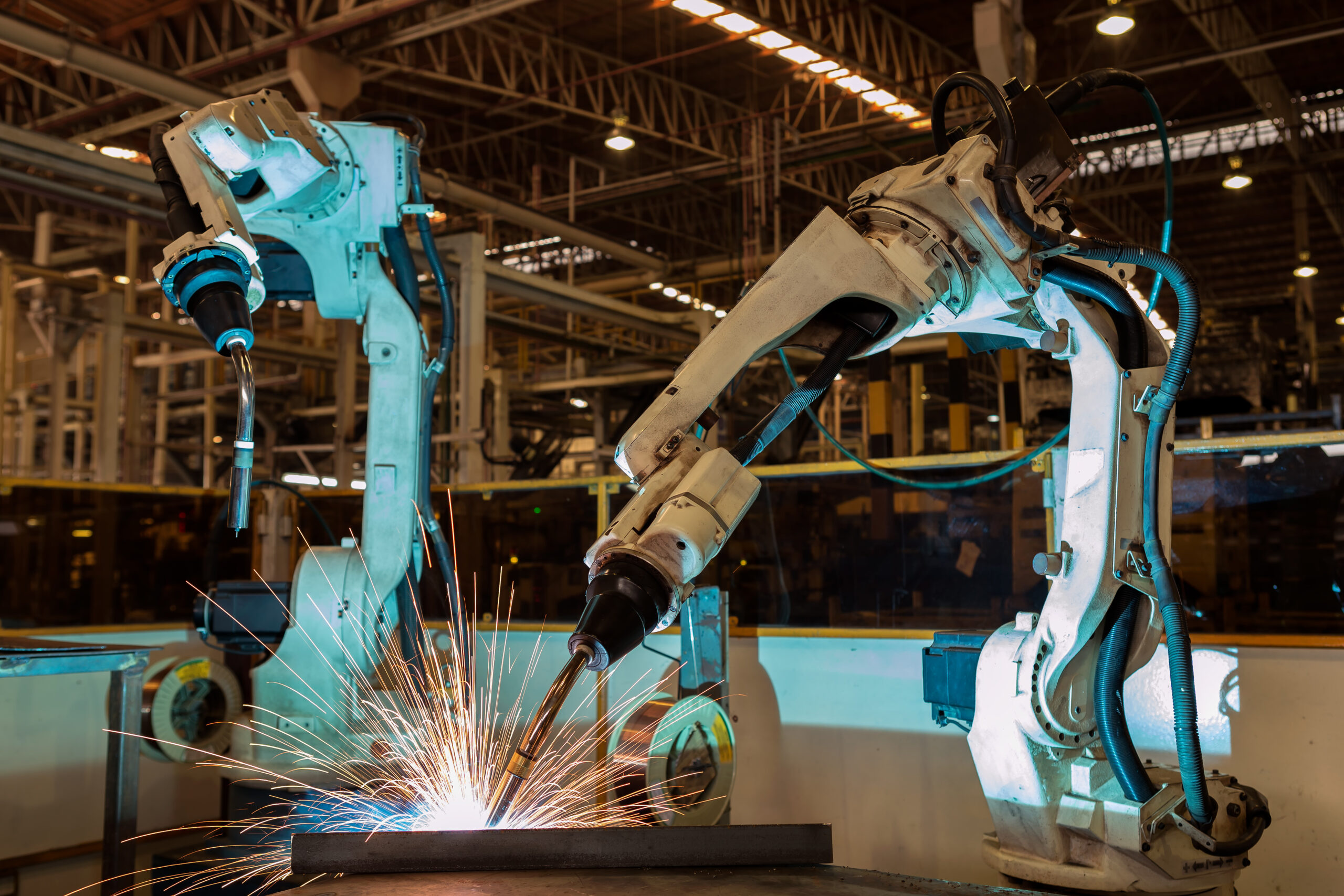
For more than a century, manufacturing has helped shape North Carolina’s economy. From its historic leadership in furniture, textiles, and food and beverage to today’s cutting-edge innovations in aerospace, biotechnologies, electric vehicles, and semiconductors, the state’s manufacturing sector has continually evolved to meet changing global demands.
North Carolina is home to the largest manufacturing workforce in the Southeast and one of the nation’s most diverse industrial economies. Modern manufacturers are increasingly leveraging automation, robotics, artificial intelligence, advanced materials, and data-driven production to improve efficiency, quality, and innovation.
Supported by world-class research institutions, strategic infrastructure, and a collaborative business environment, North Carolina has become a destination for companies seeking to build, expand, and compete in advanced manufacturing.
Key takeaways:
- There are 479,000+ manufacturing workers in North Carolina
- Manufacturing investment has accounted for $60.8 billion dollars and 85.7K jobs since 2021
- There are 11,600+ manufacturers operating in the state
What is Advanced Manufacturing?
Advanced manufacturing refers to the use of innovative technologies, digital systems, and highly specialized production methods to improve efficiency, precision, and product quality. Rather than relying solely on traditional assembly processes, advanced manufacturers integrate automation, robotics, artificial intelligence, data analytics, additive manufacturing, and advanced materials throughout production.
Companies leverage smart manufacturing systems to monitor equipment in real time, automate repetitive tasks, optimize production schedules, and improve quality control. These technologies not only increase productivity but also create long-term cost savings for the company and allow employees to focus on higher-value work requiring technical expertise and problem-solving. The result is a manufacturing sector that is more innovative, more resilient, and better positioned to compete in global markets.
North Carolina has embraced this transformation across nearly every major manufacturing industry. The state has also cultivated multiple advanced manufacturing clusters that support industry growth through shared suppliers, workforce expertise, and research partnerships.
Explore North Carolina’s Manufacturing Ecosystem
Key Industries Driving the Manufacturing Sector in North Carolina

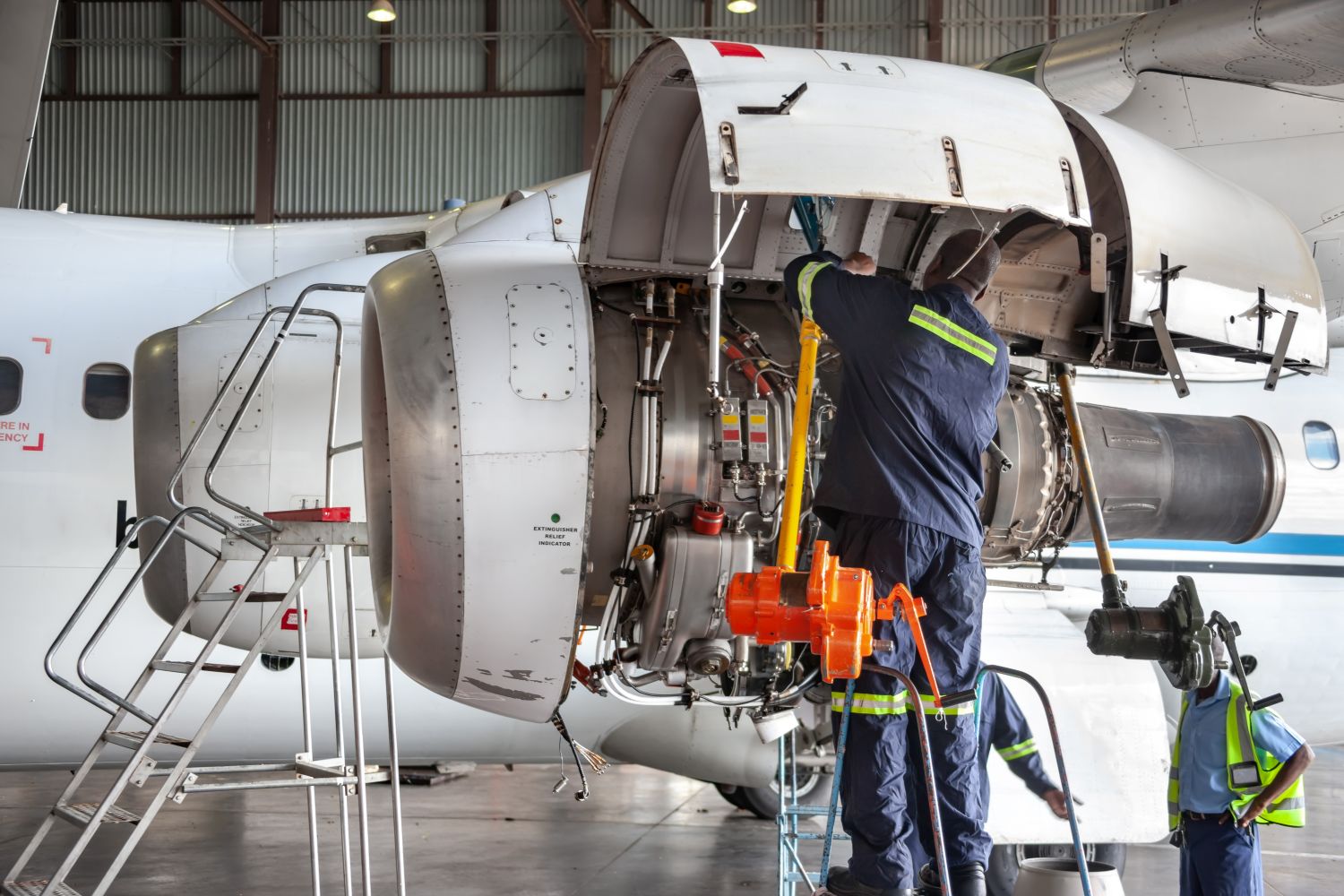
Known as the “First in Flight” state, North Carolina continues to build on its aviation legacy through a rapidly growing aerospace manufacturing sector. Companies such as Pratt & Whitney, HondaJet, Eaton, GE Aerospace, and Lockheed Martin produce aircraft structures, propulsion systems, precision components, defense technologies, and advanced composite materials for commercial and military applications. Investments from innovative companies like JetZero further strengthen this ecosystem, giving aerospace companies access to the research capabilities, skilled talent, suppliers, and infrastructure needed to move technologies from development to production in North Carolina.
With eight military installations, world-class research institutions, and a highly-skilled workforce of exiting military, North Carolina is primed to support the research and manufacturing of defense technologies. Companies like Hendrick Technical Solutions are using their advanced knowledge from automotive and aerospace manufacturing to produce reliable, mission-ready technology to power defense operations.
Manufacturers throughout North Carolina produce industrial machinery, automation equipment, precision tools, electrical equipment, and components used across numerous industries. Manufacturers like US Forged Rings, Johnson Controls, Caterpillar, Crown Equipment and more support construction, agriculture, logistics, energy production, and industrial automation while helping modernize manufacturing operations worldwide.
Quickly becoming a world-renowned life sciences and biotechnology hub, advanced manufacturers in North Carolina produce vaccines, biologics, pharmaceuticals, medical devices, and laboratory technologies that serve patients around the globe. Companies like Genentech, Johnson & Johnson, and AbbVie benefit from close collaboration with leading research universities, Research Triangle Park, and a highly educated workforce specializing in biotechnology, chemistry, engineering, and advanced production.
The transition toward clean energy has created new opportunities across North Carolina’s manufacturing sector. Companies like Toyota, ABB, Forge Nano, TSEA, and LS Cable & System manufacture batteries, energy storage technologies, advanced materials, electrical equipment, and components supporting renewable energy infrastructure. Significant investments in semiconductor production and energy technology demonstrate the state’s growing role in supporting America’s clean energy future.
A Workforce Built for Advanced Manufacturing
Highly skilled workers are driving the momentum behind manufacturing innovation. In North Carolina, home to the nation’s leader in workforce development, the advanced manufacturing industry is supported by one of the nation’s strongest talent development ecosystems. The state’s 58 community colleges and 52 colleges and universities award more than 33,000 STEM degrees each year. Five Tier-1 research universities produce engineers, scientists, and technical professionals who help manufacturers innovate and commercialize new technologies.
These institutions, along with workforce partners, collaborate closely with industry to prepare workers for careers requiring technical expertise, advanced equipment operation, engineering, data analysis, and precision manufacturing. Some of these partnerships include customized workforce training programs, such as NC Edge, to help both new and expanding manufacturers quickly develop the specialized talent needed for modern production environments.

White Paper: Inside North Carolina's Workforce
North Carolina’s commitment to growing its workforce and training institutions is evident through strategic initiatives and investments in the public education system and nonprofits that are training residents and newcomers alike for lifelong careers. Explore the data, insights, and analysis in our workforce white paper.
Innovation, Technology, and Infrastructure Driving Manufacturing Growth
North Carolina’s advanced manufacturing growth is supported by an ecosystem that connects research and innovation with modern infrastructure, industrial sites, workforce development, and access to markets. Together, these assets give manufacturers the resources to develop new technologies, establish production operations, and scale as their businesses grow.
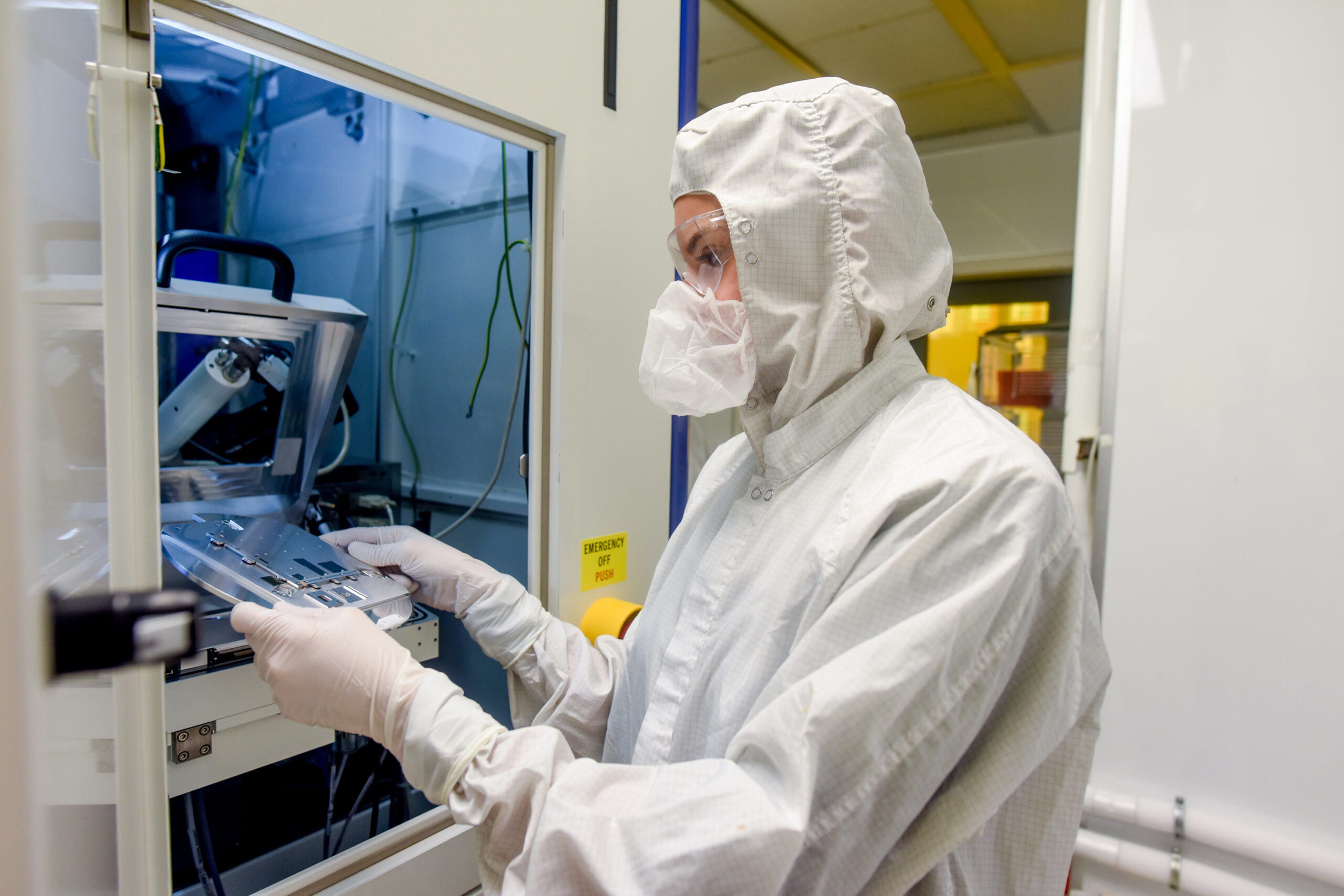
Photo Courtesy of NC State CLAWS
Research and Innovation
There are several educational institutions leading programs that contribute to manufacturing innovation:
- North Carolina State University (NC State): The Commercial Leap Ahead for Wide Bandgap Semiconductors (CLAWS) Hub is focused on advancing technologies for DoW that have dual-use solutions for civilians. NC State has also been chosen to lead a 10-year Department of War initiative aimed at modernizing textile manufacturing in the United States to support the defense industry.
- North Carolina Agricultural & Technical University (NC A&T): The Autonomous Cooperative Control of Emergent Systems of Systems (ACCESS) Laboratory aims to address fundamental problems in modeling, analysis, control, and improvement of complex systems.
- University of North Carolina at Charlotte (UNC Charlotte): The Battery Complexity, Autonomous Vehicle and Electrification Research Center (BATT CAVE) is driving innovation in batteries and their applications that will drive the next generation of autonomous vehicles, smart cities, and intelligence systems.
Infrastructure and Sites Built for Growth
Companies that invest in manufacturing operations in North Carolina not only benefit from access to research partnerships, but the state offers access to a broad inventory of industrial properties, including ready-to-build sites and existing facilities.
Many industrial sites are strategically located near major interstate highways, rail networks, airports, or ports, giving manufacturers efficient connections to suppliers, employees, customers, and global markets. Companies interested in North Carolina can browse available sites and properties in our site selection database to evaluate factors such as acreage, buildings, utilities, transportation access, and other site characteristics.
This combination of available sites and transportation infrastructure gives manufacturers flexibility as they evaluate locations for new facilities, expansions, and future growth. It also supports the increasingly complex supply chains required by advanced industries, from aerospace and automotive to life sciences and clean energy.

White Paper: North Carolina’s Infrastructure Powers Business Growth
From connected transportation networks and global logistics access to shovel-ready sites and reliable utilities, North Carolina offers the foundation companies need to compete in a rapidly evolving economy. This white paper, which was produced in partnership with Parker Poe, explores how the state’s investments in infrastructure are positioning companies for long-term economic success.
Why Manufacturers Choose North Carolina
North Carolina has deep roots in traditional manufacturing, but the state has continued to build that foundation by attracting investment in industries at the forefront of the global economy. Since 2021, manufacturing companies of all sectors have invested $60.8B in North Carolina, announcing up to 85.7K jobs for its residents.
This continued investment reflects the depth of North Carolina’s manufacturing ecosystem. Companies can draw on a large and highly skilled workforce, established supplier networks, world-class research institutions, strategic transportation infrastructure, and a business environment designed to support long-term investment.
Just as important, North Carolina’s manufacturing base is diverse. Aerospace and defense, automotive and transportation, life sciences, furniture, industrial equipment, semiconductors, clean energy, and advanced materials all contribute to the state’s industrial economy. That diversity creates opportunities for manufacturers to tap into specialized talent and suppliers while reducing reliance on any single industry.
In-State Resources for Advanced Manufacturing
North Carolina also provides resources to help manufacturers adopt new technologies, strengthen their operations, and develop the workforce needed for advanced production.
- SMARTER NC: Supported through a federal Department of Energy grant, SMARTER NC helps eligible North Carolina manufacturers address some of the costs associated with adopting and integrating smart manufacturing technologies. Participating companies receive assessments and technical assistance to identify opportunities for technology adoption and develop implementation strategies.
- NCEdge: Delivered through North Carolina’s 58 community colleges, NCEdge provides customized workforce training for qualifying businesses. Companies can use the program to upskill and reskill employees, support technology adoption, improve operational efficiency, and develop training tailored to their specific needs.
- Accelerate NC: Focused on life sciences manufacturing, Accelerate NC is building specialized workforce pipelines to support North Carolina’s growing biomanufacturing sector. Led by the North Carolina Biotechnology Center, the initiative brings together community colleges, universities, and workforce partners to expand training and career opportunities in life sciences manufacturing.
- AdvanceNC: Led by Central Carolina Community College, AdvanceNC brings together community colleges, universities, workforce development boards, and employers across a 21-county region to strengthen talent pipelines for advanced manufacturing. The initiative demonstrates how regional partnerships can respond to the workforce needs created by new technologies and expanding industries.
These resources complement North Carolina’s broader manufacturing ecosystem by helping companies address two of the most important challenges facing modern production: adopting new technologies and developing the talent to use them effectively.
The Future of Manufacturing
For companies looking to establish a new operation, expand an existing facility, or develop the next generation of manufacturing technology, North Carolina offers more than a strong manufacturing base. It offers an ecosystem built to evolve with the industry.

Frequently Asked Questions
-
What types of manufacturing are the strongest in North Carolina?
North Carolina has a diverse manufacturing sector with major strengths in aerospace and defense, automotive and transportation, pharmaceuticals and life sciences, industrial machinery, furniture, food processing, semiconductors, clean energy, and advanced materials. This industry diversity gives manufacturers access to established supply chains, specialized talent, research capabilities, and opportunities for collaboration across sectors.
-
Why do manufacturers relocate or expand in North Carolina?
Manufacturers relocate or expand in North Carolina to access a large and skilled workforce, diverse supplier networks, strategic East Coast location, modern infrastructure, research universities, available industrial sites, and a competitive business environment. The state’s manufacturing ecosystem also provides workforce training and technology adoption resources to help companies establish operations and scale over the long term.
-
How does North Carolina’s East Coast location benefit manufacturers?
North Carolina’s East Coast location gives manufacturers direct access to both domestic and global markets. The state offers proximity to major interstates, rail systems, and two deepwater ports, making it easy to move products efficiently across the globe. This strategic position reduces shipping costs, shortens delivery times, and strengthens supply chain reliability, making North Carolina an ideal location for manufacturers serving clients and suppliers worldwide.
-
How strong is North Carolina’s manufacturing workforce?
North Carolina is home to the largest manufacturing workforce in the Southeast (Lightcast, 2025), supporting advanced manufacturing, aerospace, automotive, and industrial production. Nearly half a million workers are employed in manufacturing and related fields, with expertise in engineering technology, automation, mechatronics, and skilled trades.
This manufacturing workforce in North Carolina is reinforced by the state’s extensive community college network, which aligns training programs with regional industry needs. Manufacturers benefit from a reliable talent pipeline that supports both high-volume production and specialized, high-skill operations.
Need more help?