


Popular Searches
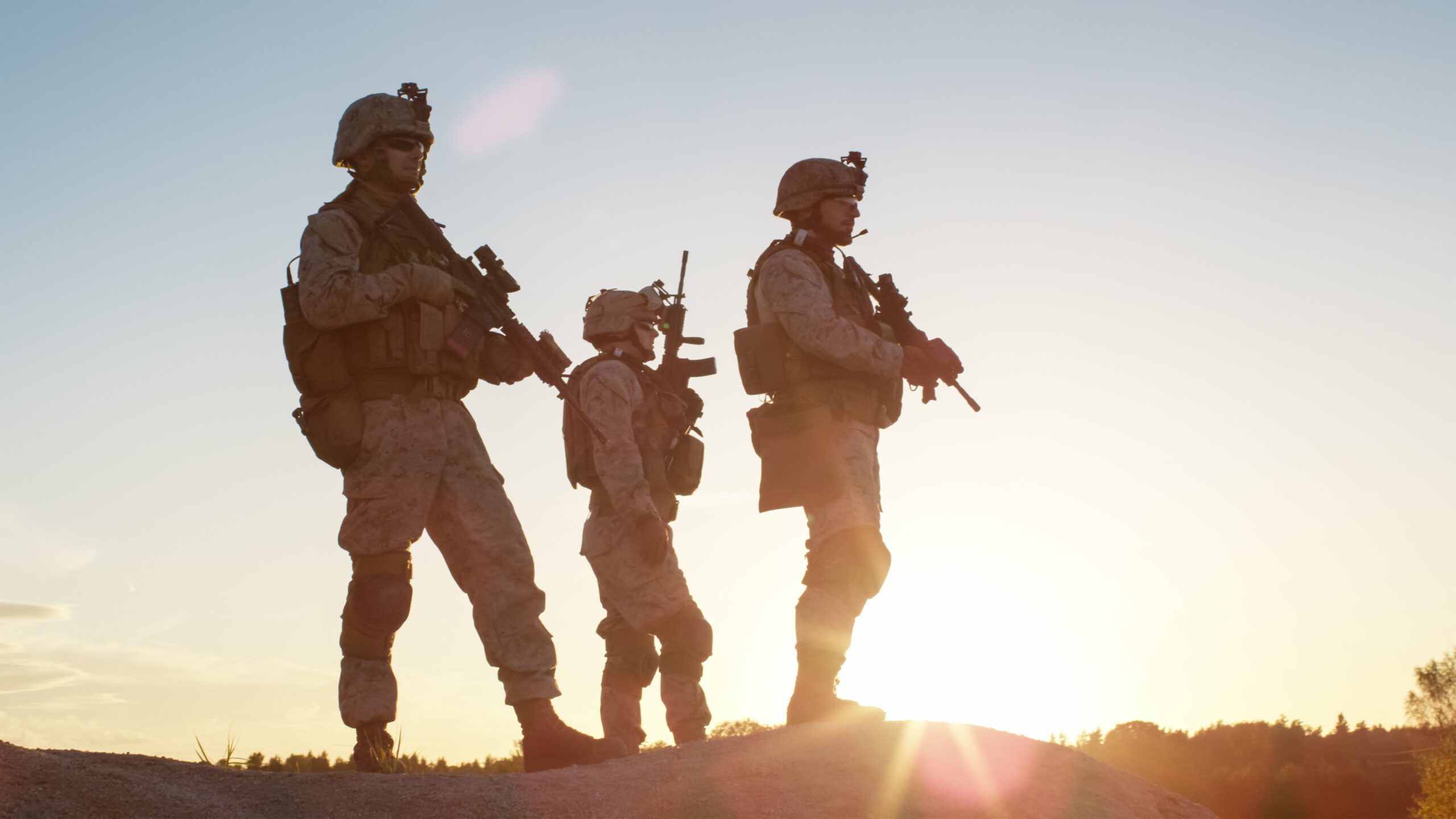
National defense no longer runs on defense contractors alone. Modern military readiness depends on a web of manufacturers, logistics providers, technology firms, universities, and an able workforce pipeline. Few states illustrate that shift better than North Carolina.
North Carolina’s defense industry brings together advanced manufacturing, aerospace production, cybersecurity and technology firms, transportation infrastructure, world-class research universities, and a deep well of military and veteran talent. Anchoring it all is one of the largest military footprints in the country – 10 active-duty bases across the Army, Marine Corps, Air Force, and Coast Guard, a large veteran population, and thousands of defense-related businesses spread across the state.
Why Modern Defense Depends on More Than Defense Contractors
For decades, the ‘defense industry’ conjured images of a handful of large prime contractors building tanks and fighter jets. The industry has changed. Today’s defense industry leans heavily on companies that specialize in producing both commercial and defense products and services.
The Department of Defense increasingly sources technology, components, and services from companies that were never built with the idea of the military as their primary customer. Institutions like software firms, rare earth mineral miners, logistics operators, and university research labs have found themselves engaging with the US government through defense contracts. North Carolina is a clear example of the evolved, modern defense industry.
The Foundation Behind North Carolina’s Defense Capabilities
North Carolina’s advantage comes from the way its strengths reinforce one another. The state combines:
- Diverse base of industry clusters, from advanced manufacturing to life sciences to technology
- A strategic East Coast location with strong highway, rail, port, and air connectivity
- One of the largest community college and university systems in the country
- Five R1 universities
- A consistent business-friendly regulatory and tax climate
- The fourth-largest military population in the country
Individually, none of these are unique to North Carolina. But together, they create an environment where military bases, supplier networks, research institutions, transportation infrastructure, and workforce development reinforce both defense missions and commercial growth at the same time.
Industries That Power North Carolina's Defense Ecosystem

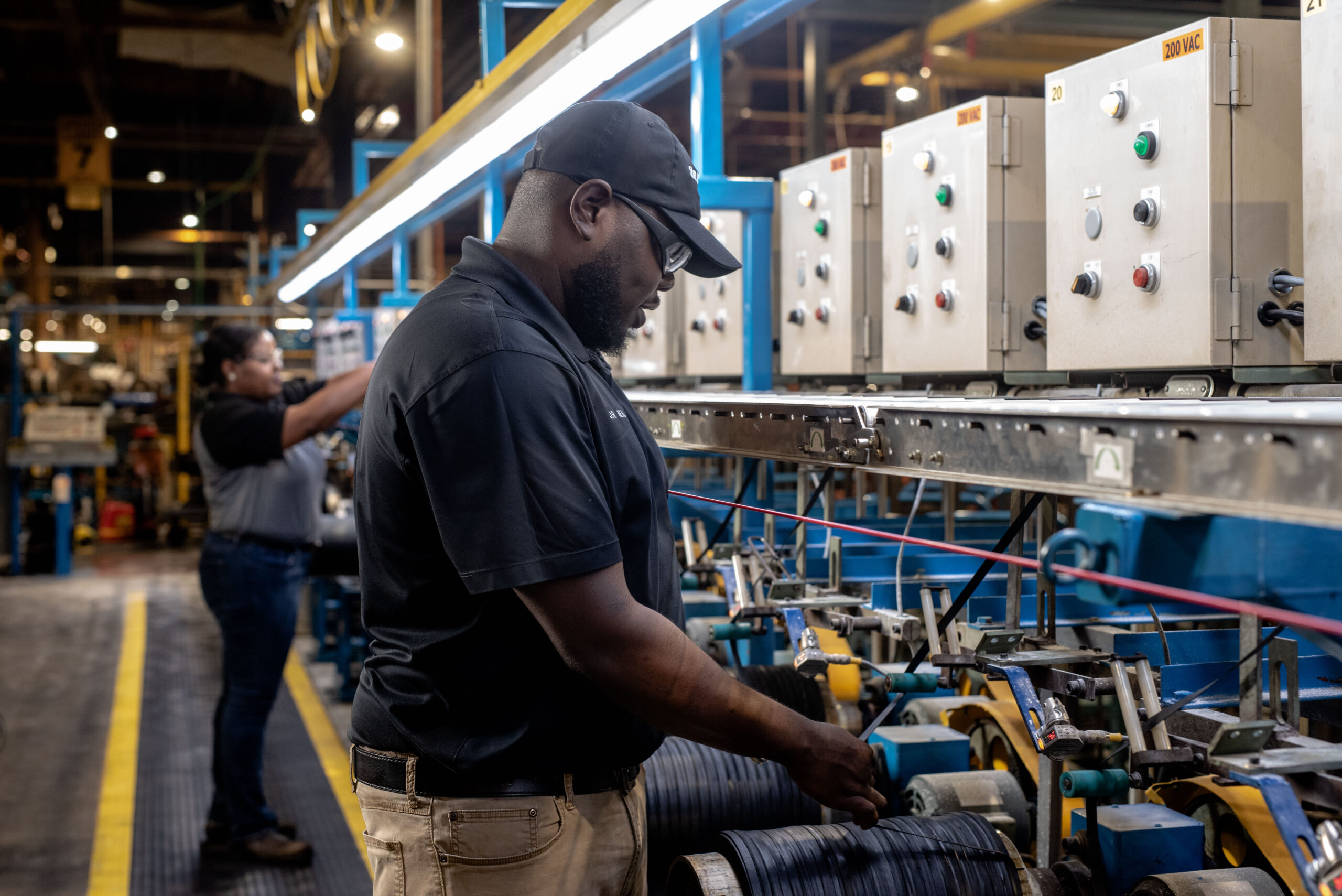
Precision manufacturing, fabrication, industrial automation, electronics production, and advanced materials form the backbone of defense supply chains. Components produced in North Carolina – from precision-machined parts to electronic assemblies – feed into aircraft, vehicles, and systems used across military and commercial platforms alike. This manufacturing base is what allows the state to support both defense readiness and everyday commercial production without maintaining two separate industrial bases.
North Carolina’s deep textile industry is a good example of that dual-use overlap. Greensboro-based Unifi has developed Berry Amendment-compliant yarns for military and tactical gear, Glen Raven produces technical fabrics for military and protective-use markets, and tactical apparel maker Tru-Spec relocated its headquarters to Kings Mountain. None of these companies set out to be defense contractors, but each now supplies materials that support the US Armed Forces.
Aerospace is one of North Carolina’s most visible defense-adjacent sectors. The state is home to more than 400 aerospace manufacturers and suppliers and an aerospace and aviation workforce of more than 51,000 people. Major companies with a North Carolina presence include Lockheed Martin, RTX, GE Aerospace, Honeywell, Collins Aerospace, Pratt & Whitney, Spirit AeroSystems, and Honda Aircraft Company. Collins Aerospace, one of the world’s largest suppliers of aerospace and defense products, is headquartered in Charlotte, and Kinston is home to a major Spirit AeroSystems facility. New investment keeps arriving, including JetZero’s planned $4.7 billion manufacturing facility at Piedmont Triad International Airport. Aircraft manufacturing, Maintenance, Repair, and Overhaul work, and component suppliers all overlap with defense production, giving North Carolina companies natural entry points into both commercial and military aviation supply chains.
Artificial intelligence, cybersecurity, software development, secure communications, and data analytics are an increasingly central part of national defense. Modern military readiness depends as much on secure networks and data systems as it does on physical hardware, and North Carolina’s growing technology sector – anchored by the Research Triangle – is positioning the state to support that demand. Cary-based SAS Institute, one of the world’s largest privately held analytics and AI companies, develops defense and intelligence solutions used for predictive maintenance, supply chain analytics, and secure decision-making by military and government customers.
Transportation & Logistics

North Carolina’s transportation network – including interstate highways, rail connections, deepwater ports, and a growing air cargo infrastructure – supports movement for both military and commercial customers.
On rail, North Carolina is served by two Class I freight railroads, Norfolk Southern and CSX Transportation, alongside a network of shortline and regional carriers that provide local reach. On the coast, the Port of Wilmington and the Port of Morehead City give the state direct deepwater access for military and commercial cargo alike, including proximity to Military Ocean Terminal Sunny Point, the largest military terminal in the world.
View Infrastructure White Paper
Research Institutions Drive Innovation

The Research Triangle – anchored by Duke University, North Carolina State University, and the University of North Carolina at Chapel Hill – is a key innovation corridor connecting talent, research, and commercialization opportunities across the state. These partnerships are already producing results. NC State hosts the Laboratory for Analytic Sciences, a research facility built with the National Security Agency to advance data analysis for national security missions, and leads the UNC System in DoD-funded research. UNC-Chapel Hill has been selected to host the Department of Defense’s Senior Service College Fellowship, bringing senior military officers to campus for graduate-level work in national security strategy, artificial intelligence, and public policy.
Five universities in North Carolina – the three that comprise the Research Triangle as well as East Carolina University and University of North Carolina at Charlotte – have earned the valuable R1 designation status, signifying their leading ability to foster innovation. Additionally, North Carolina A&T University in Greensboro anticipates becoming the first public HBCU in the country to earn R1 status in 2027.
Supply Chain Opportunities Extend Beyond Traditional Defense Contractors
One of the most important things for businesses to understand about North Carolina’s defense ecosystem is that participation does not require manufacturing weapons or military equipment. Companies across many sectors support defense initiatives indirectly but meaningfully, including businesses in:
- Precision machining and metal fabrication
- Electronics and component manufacturing
- Packaging and plastics
- Software and IT services
- Warehousing and distribution
- Transportation and freight
- Professional and engineering services
Why Defense Companies Choose North Carolina for Business Expansion

For companies evaluating where to locate or expand defense-related operations, North Carolina offers a combination of factors that few states can match:
- Direct access to defense customers through the state’s military bases and prime contractor presence
- An established and diversified supplier network across manufacturing, aerospace, and technology
- A research and innovation ecosystem anchored by nationally ranked universities
- A workforce pipeline that includes both technical graduates and military-trained talent – an average of roughly 20,000 service members transition out of North Carolina military bases each year into the civilian workforce
- A scalable, business-friendly operating environment
- Long-term room for growth, from certified industrial sites to megasites capable of supporting large-scale manufacturing
Federal policy shifts and rising global demand for defense capabilities have only sharpened this advantage. Economic development leaders in North Carolina have noted a recent uptick in interest from defense-related companies evaluating new locations, driven in part by increased federal defense spending. For companies weighing where that growth should happen, North Carolina’s combination of bases, suppliers, and talent makes it a natural fit.
How EDPNC Supports Defense-Related Businesses
Navigating a decision this complex – evaluating sites near military bases, understanding incentives, and identifying the right suppliers and partners – is easier with an experienced guide. The Economic Development Partnership of North Carolina (EDPNC) works with companies at every stage of that process.
EDPNC’s support for defense-related businesses includes:
- Site selection assistance, including access to certified and defense-ready industrial sites
- Introductions to local communities and economic development partners near military bases
- Workforce resources, including connections to community colleges and university programs
- Guidance on state and local incentive programs
- Market intelligence on North Carolina’s defense supply chain and industry clusters
- Support for companies expanding existing North Carolina operations
Whether a company is a prime contractor, an aerospace supplier, a technology firm, or a manufacturer exploring its first defense-related contract, EDPNC serves as a single point of contact to help connect the dots between military assets, supplier networks, and the resources needed to grow.
Conclusion
North Carolina’s competitive advantage in defense doesn’t come from any single industry or military base. It comes from the way manufacturing, aerospace, technology, logistics, research institutions, transportation infrastructure, and military assets work together as one interconnected ecosystem. That interconnection is what allows the state to support national defense readiness while also creating growth opportunities for companies that have never thought of themselves as defense businesses.
For manufacturers, suppliers, aerospace and technology companies, and site selectors evaluating where to grow next, North Carolina offers a defense ecosystem built for long-term partnership. Connect with EDPNC to explore how your business can find its place in it.

Let's Stay Connected
Frequently Asked Questions
-
What is North Carolina's defense ecosystem?
North Carolina’s defense ecosystem is the network of manufacturers, aerospace and technology companies, logistics providers, research universities, and military bases that together support the US defense industry. Defense is North Carolina’s second-largest economic sector, generating an estimated $66 billion in annual economic impact.
-
Can a company participate in the defense ecosystem without being a defense contractor?
Yes. Many businesses support national defense indirectly by supplying components, materials, logistics, software, or professional services to prime contractors and military bases, without ever manufacturing weapons or holding a direct defense contract themselves.
This is particularly relevant for small and mid-sized businesses. North Carolina is home to thousands of identified defense contractors and subcontractors, supporting hundreds of thousands of defense-related jobs statewide. Commercial manufacturers and suppliers who don’t see themselves as part of the defense industry often have a more direct path into the supply chain than they realize – through subcontracting relationships, dual-use production lines, or partnerships with prime contractors already operating in the state.
-
What industries support defense initiatives in North Carolina?
Advanced manufacturing, aerospace and aviation, technology and cybersecurity, transportation and logistics, and research institutions all contribute to North Carolina’s defense capabilities, alongside more than 10 military bases.
-
How do military bases contribute to North Carolina's economy?
North Carolina’s 10 active-duty bases, including Fort Bragg, Camp Lejeune, and Seymour Johnson Air Force Base, support the state’s fourth-largest active-duty military population in the country and contribute directly to the state’s $66 billion defense-related economic impact.
Need more help?